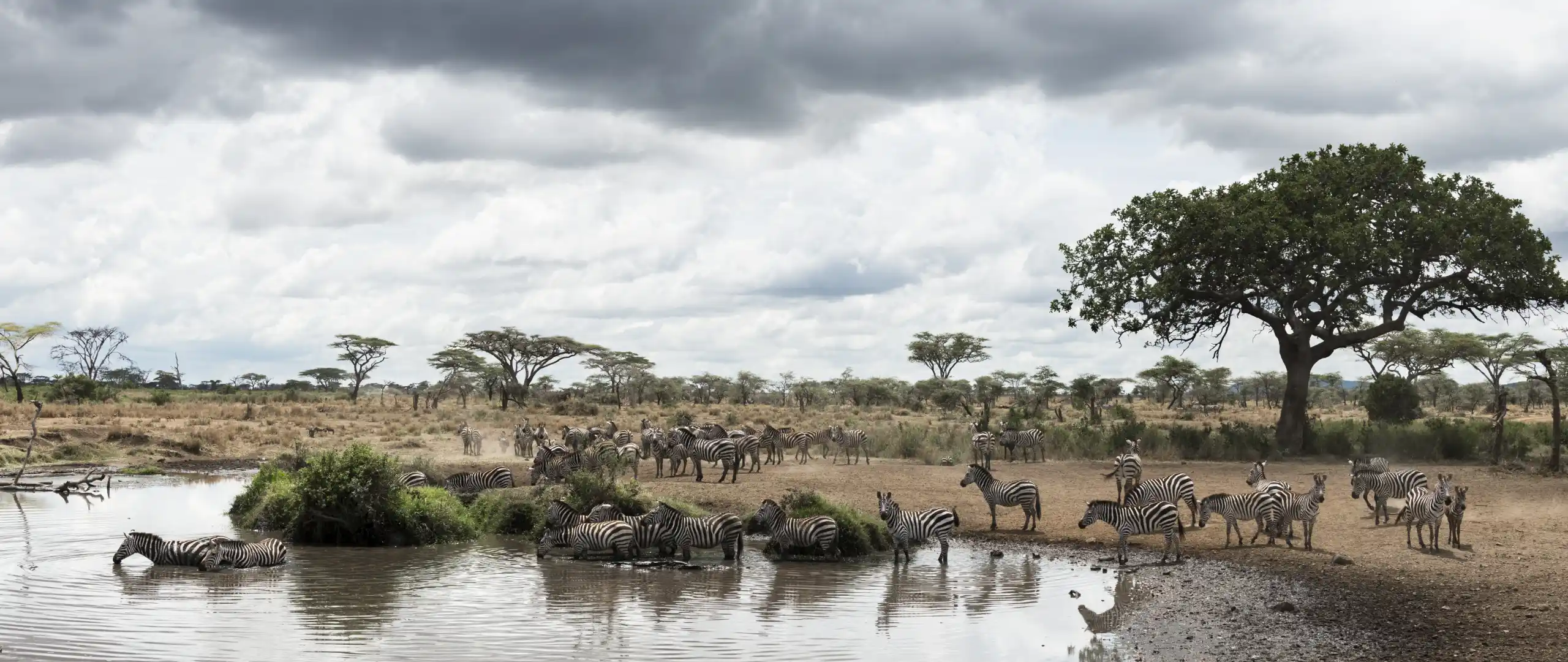
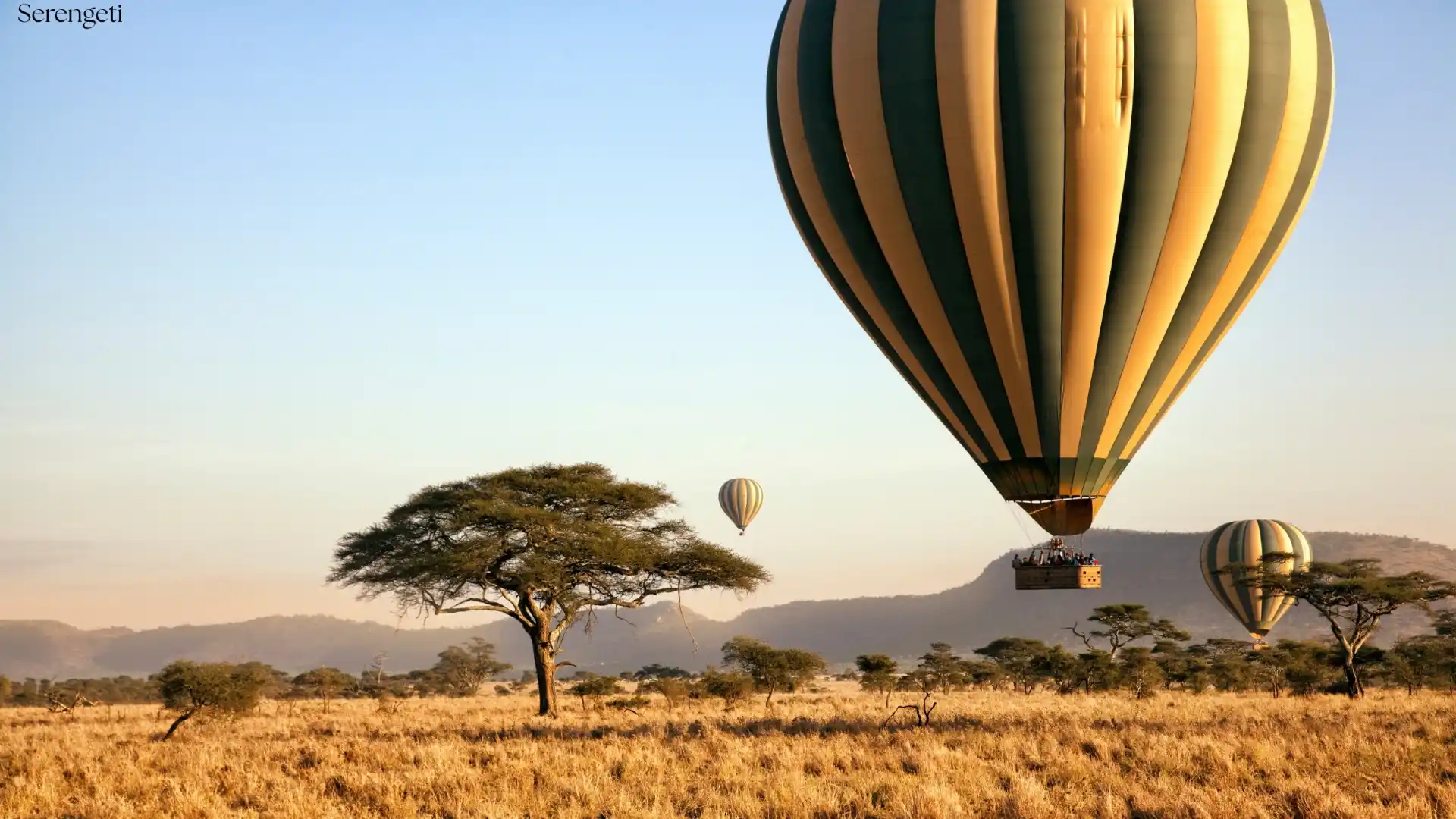
Quick Takeaways (13 min read)
- ▸Serengeti visitor arrivals grew to 491,398 in 2025 — up from 388,865 in 2023 — while Maasai Mara fell to 213,000 from 420,000 over the same period
- ▸For the third consecutive year, Tanzania's Serengeti has outpaced Kenya's Maasai Mara in international tourist arrivals
- ▸The Serengeti covers ~14,750 km² versus the Mara's ~1,510 km² — the wildebeest spend most of their annual cycle on the Tanzanian side
- ▸Northern Serengeti offers the same Mara River crossings with typically fewer vehicles than the Kenyan side of the ecosystem
- ▸Tanzania's northern circuit combines Serengeti, Ngorongoro, Tarangire, and Lake Manyara in one integrated road-based itinerary
For decades, the Maasai Mara in Kenya and the Serengeti in Tanzania have been spoken of in the same breath. They share the same wildebeest, the same river crossings, the same golden grasslands stretching to a horizon that seems to belong to another century. Most first-time safari travellers assume the two parks are essentially interchangeable — two sides of one ecosystem, offering the same experience with different passports.
The visitor numbers tell a different story. For the third consecutive year, Tanzania's Serengeti National Park has drawn more international tourists than Kenya's Maasai Mara National Reserve — and the gap is widening. According to figures published in Tanzania's Economic Survey 2026 and reported by Daily News Tanzania, Serengeti visitor arrivals rose from 388,865 in 2023 to 430,124 in 2024 and reached 491,398 in 2025. Over the same period, Maasai Mara arrivals fell from 420,000 in 2023 to 343,000 in 2024 and dropped further to 213,000 in 2025.
That is not a marginal difference. It is a structural shift in where East Africa's safari travellers are choosing to spend their time and money — and understanding why matters if you are planning your own migration safari.
What the Numbers Show
The headline is straightforward: Serengeti up, Maasai Mara down, for three years running. But the trajectory within each park tells a more interesting story than the headline alone.
Serengeti's growth has been steady and sustained — roughly 11 percent year-on-year from 2023 to 2024, and another 14 percent from 2024 to 2025. This is not a post-pandemic bounce that peaked and levelled off. It reflects continued momentum in a park that was already Africa's most famous wildlife destination before the current surge.
Maasai Mara's decline has been sharper. Losing roughly 18 percent of visitors between 2023 and 2024, then another 38 percent between 2024 and 2025, suggests factors beyond normal seasonal variation. Tourism stakeholders on both sides of the border attribute the divergence partly to rising entry fees in the Mara, partly to Tanzania's ability to offer integrated multi-destination packages, and partly to a broader recalibration of how international travellers evaluate value, crowd levels, and ecosystem integrity.
The context matters too. Tanzania's overall tourism sector is performing at record levels — 2.09 million international visitors and $4.2 billion in revenue in 2025, as we detailed in our safari boom analysis. Serengeti's growth sits within a national success story, not in isolation from it. Kenya's safari sector remains substantial, but the Mara-specific decline is real and measurable.
Serengeti visitor numbers grew from 388,865 in 2023 to 491,398 in 2025 — while Maasai Mara arrivals fell from 420,000 to 213,000 over the same three-year period.
Visitor Arrivals 2023–2025
One Ecosystem, Two Countries
Before comparing the parks, it helps to understand what they actually share — and where they diverge.
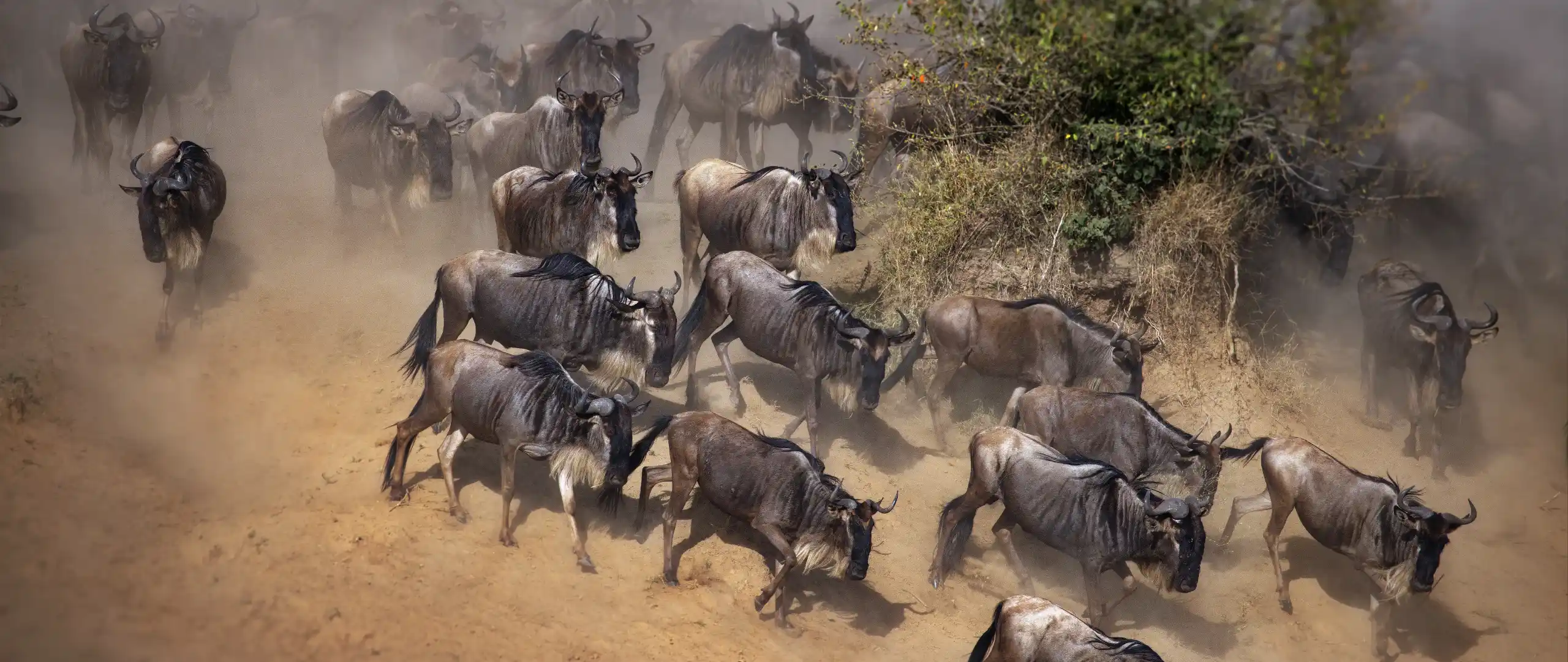
The Serengeti-Mara ecosystem is one continuous landscape. Approximately 1.3 million wildebeest, 200,000 zebras, and half a million Thomson's gazelles move through it in an annual circuit of roughly 1,200 kilometres, driven by rainfall and grass quality rather than any invisible border. The Mara River, famous for its crocodile-filled crossings, forms part of the boundary between Tanzania and Kenya. Herds cross it in both directions depending on the season.
Tanzania's Serengeti National Park covers approximately 14,750 square kilometres — an area larger than Connecticut or Northern Ireland. Kenya's Maasai Mara National Reserve, by contrast, encompasses roughly 1,510 square kilometres. The Mara is not small by any absolute measure, but it represents a fraction of the total ecosystem. The wildegeti spend the majority of their annual cycle on the Tanzanian side: calving in the southern Serengeti and Ndutu between January and March, moving north through the central and western Serengeti in spring, and only entering Kenya in significant numbers from roughly July through October.
This geographic reality is something many travel brochures gloss over. The migration's most famous spectacle — the Mara River crossings — can be witnessed from either country, but the ecosystem's depth, its year-round wildlife density, and its sheer spatial scale belong disproportionately to Tanzania.
Our Great Migration guide explains the full annual circuit in detail. The short version: if you want to understand the migration as a living system rather than a single dramatic event, Tanzania offers more chapters of the story across more months of the year.
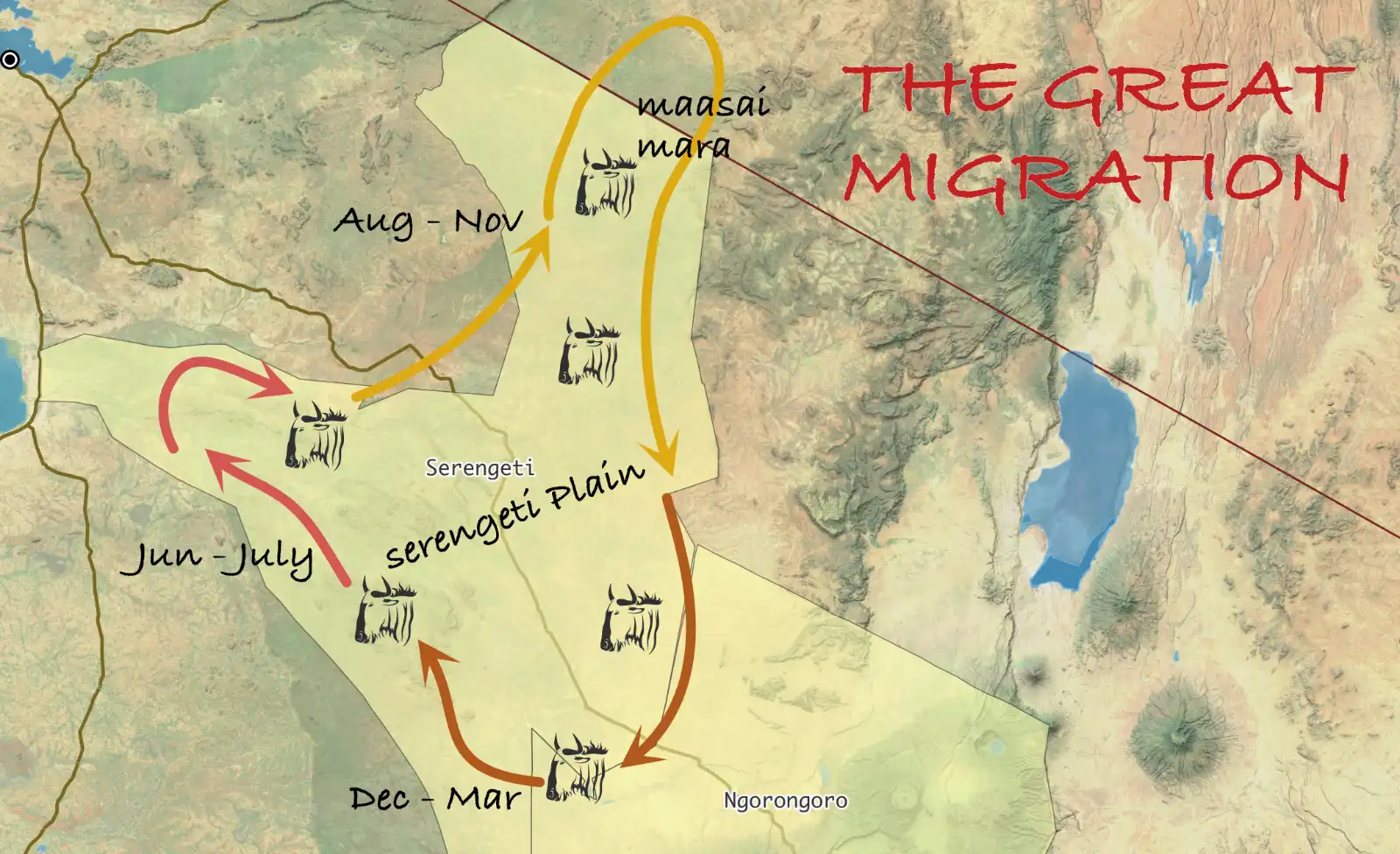
The Serengeti-Mara ecosystem is one continuous landscape — but the wildebeest spend the majority of their annual cycle on the Tanzanian side, not in Kenya.
Why Serengeti Is Pulling Ahead
Industry analysts and park authorities cite several converging factors behind Tanzania's sustained growth. None of them alone explains the trend; together they describe a destination that has become easier to reach, more varied to explore, and better value relative to the experience delivered.
Competitive park fees matter. Tanzania has maintained a pricing structure that many operators and repeat visitors consider more predictable and better value than Kenya's recent fee increases in the Mara. For a family or group booking a week-long migration safari, the cumulative difference in park entry costs can be substantial — without any corresponding reduction in wildlife quality on the Tanzanian side of the river.
Integrated multi-destination packages are the second factor. Tanzania's northern circuit connects the Serengeti with the Ngorongoro Crater, Tarangire National Park, and Lake Manyara within a single, well-established road network. A ten-day itinerary can deliver four distinct ecosystems — caldera, baobab woodland, alkaline lake, and open savanna — without a single internal flight. Kenya's Mara, magnificent as it is, functions primarily as a standalone destination unless you extend into Amboseli or the Laikipia plateau.
Conservation management plays a quieter but equally important role. Tanzania's Serengeti ecosystem remains largely intact, with wildlife corridors connecting the national park to surrounding conservation areas and community lands. Uninterrupted movement across one of Africa's largest protected landscapes is not an accident — it is the product of decades of policy choices that prioritised ecosystem continuity over short-term development pressure. Kenya's side of the ecosystem has faced greater fragmentation from fencing, settlement expansion, and land-use change in areas adjacent to the reserve.
Infrastructure investment reinforces the trend. Tanzania has expanded airstrips, improved road access to northern circuit parks, and increased international flight connections through Kilimanjaro International Airport. The country also earned the World's Leading Safari Destination at the 2025 World Travel Awards for the third consecutive year — recognition we covered in our safari tourism award article — which keeps Tanzania visible in the international travel market at precisely the moment when travellers are recalibrating their East Africa plans.
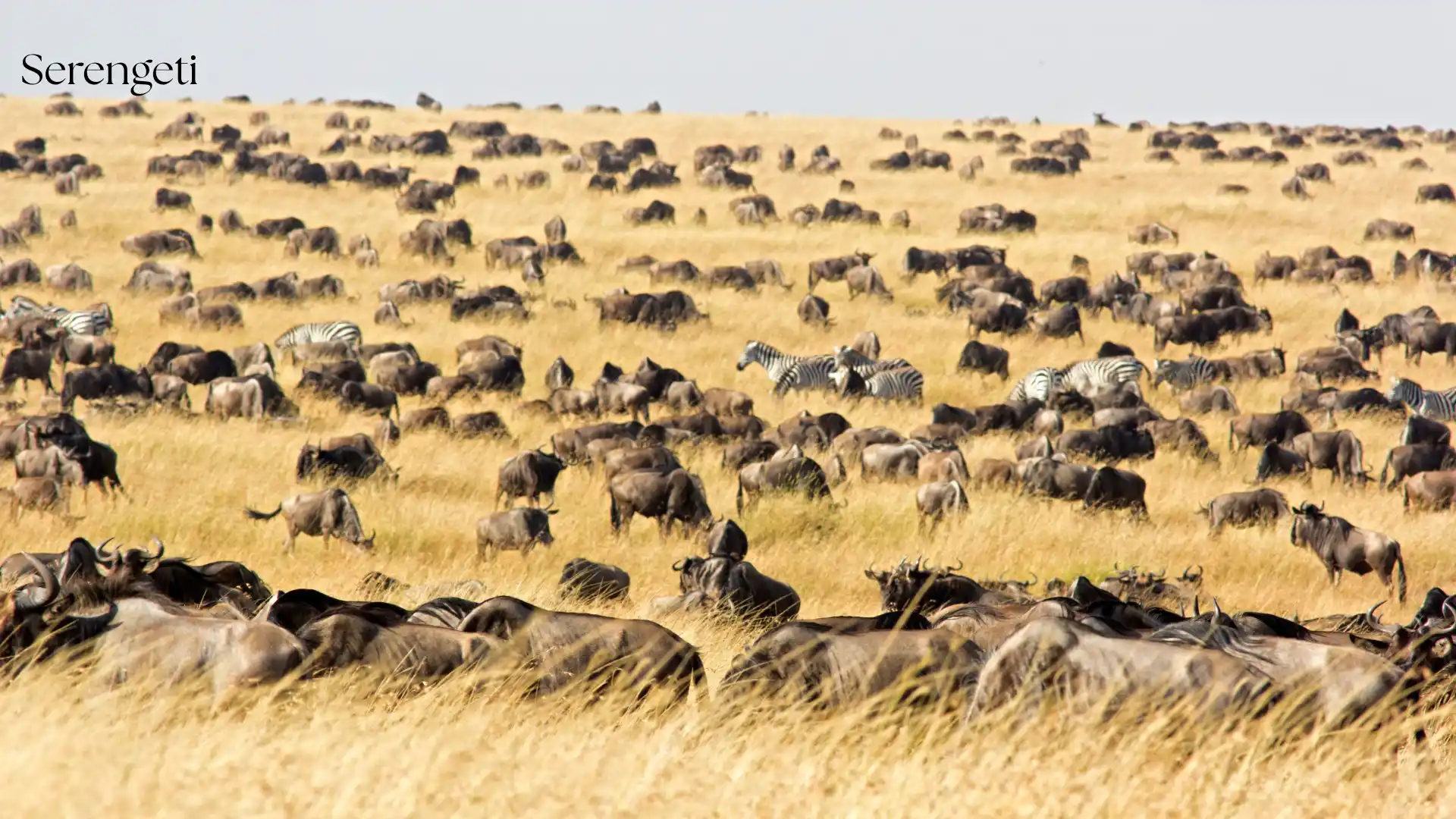
Tanzania's northern circuit lets you combine Serengeti, Ngorongoro, Tarangire, and Lake Manyara in one road-based itinerary — four distinct ecosystems without a single internal flight.
What Mara Still Does Well
An honest comparison requires acknowledging what the Maasai Mara genuinely offers — and why it remains a beloved destination for many experienced safari travellers.
The Mara River crossings, when they happen on the Kenyan side, can be spectacular. The river's geography in the Mara creates natural bottlenecks where herds accumulate in large numbers before plunging into the water. During peak season, the concentration of animals and the frequency of crossing attempts can be intense. For photographers seeking the classic image of wildebeest leaping into a crocodile-filled river, the Mara delivers.
Accessibility from Nairobi is another advantage. The Mara lies within a half-day drive of Kenya's capital, making it feasible for shorter trips and weekend extensions that would be impractical for the Serengeti's more remote northern reaches. For travellers already based in Nairobi for business or connecting flights, the Mara offers a genuine safari without the logistics of crossing into Tanzania.
Kenya's safari industry is mature, professional, and deeply experienced. Many of the continent's finest guides learned their craft in the Mara. The reserve's long tourism history means a well-developed lodge infrastructure, established viewing protocols, and a community of operators who know the river's crossing points intimately.
The point is not that the Mara is a poor choice. It is that the choice between Serengeti and Mara is no longer the toss-up it once appeared to be — and the visitor statistics reflect travellers arriving at that conclusion in growing numbers.
Serengeti vs Maasai Mara at a Glance
Choosing the Tanzanian Side
If your primary goal is the Great Migration, the most important strategic decision is not Kenya versus Tanzania in the abstract — it is which side of the Mara River you position yourself on during crossing season.
The herds cross the Mara River in both directions throughout the July to October window. The same animals, the same crocodiles, the same drama — but the viewing experience differs depending on crowd density, lodge location, and how your guide reads the river on any given morning.
Staying in the northern Serengeti on the Tanzanian side gives you access to the same crossings with typically fewer vehicles at the riverbank. The Kogatende and Lamai areas of northern Serengeti sit directly opposite the Mara's most famous crossing points. You watch the same herds from a quieter side of the water — often with more space to manoeuvre your vehicle and more time to observe without the pressure of dozens of other jeeps jostling for position.
Outside crossing season, Tanzania's advantage becomes even clearer. Calving in the southern Serengeti and Ndutu between January and March is entirely on the Tanzanian side — there is no Kenyan equivalent. The Grumeti River crossings in the Western Corridor between April and June happen exclusively in Tanzania. The return migration through the eastern Serengeti in November and December is a Tanzanian experience that receives a fraction of the attention the August crossings attract, despite being equally beautiful.
For travellers who want the migration plus the broader northern circuit, Tanzania is the natural base. Our 7-Day Calving Migration Safari targets the southern Serengeti during peak calving season. The Migration and Zanzibar itinerary positions you in northern Serengeti for crossing season with an optional Indian Ocean extension. The Jewels of Tanzania and 5-Day Northern Circuit combine Serengeti time with Ngorongoro and Tarangire for a complete introduction to the region.
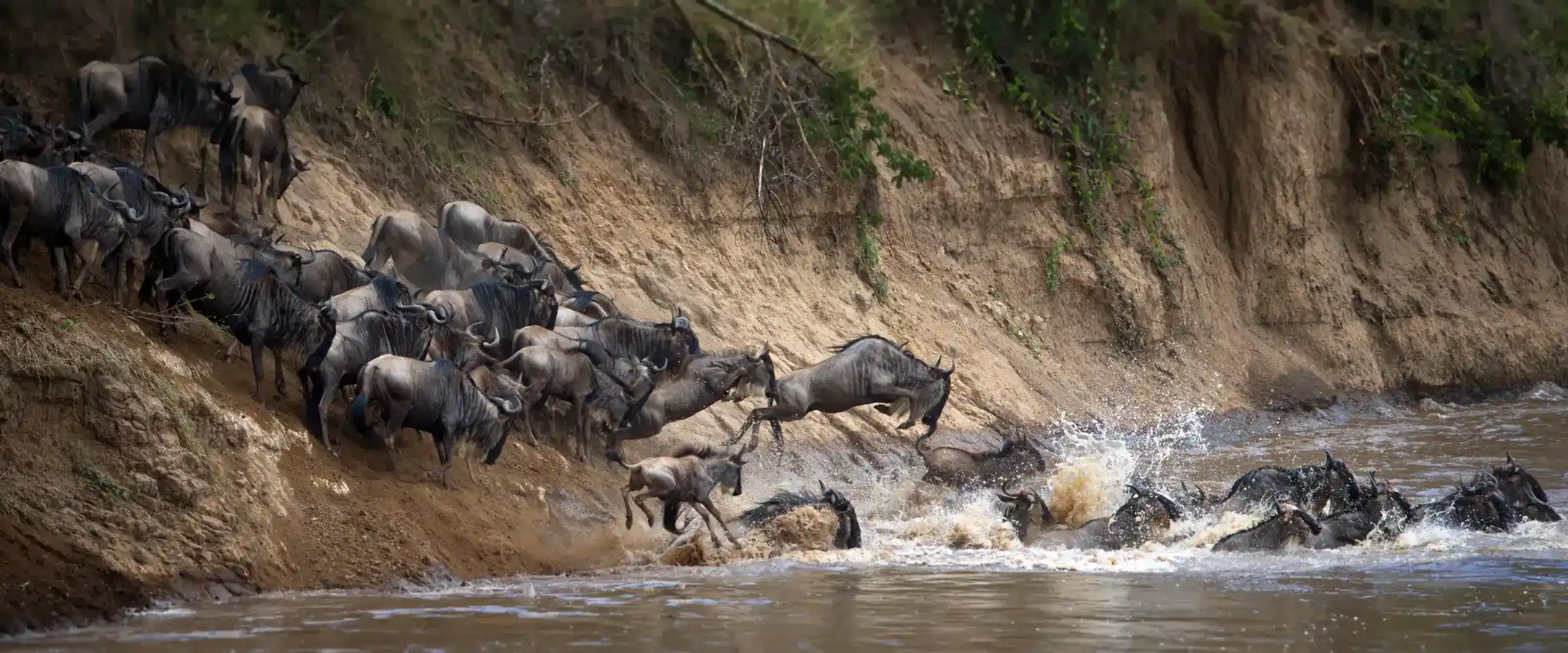
Staying in northern Serengeti gives you the same Mara River crossings with typically fewer vehicles — the same herds, the same drama, from a quieter side of the water.
The migration's calving season, Grumeti crossings, and return journey all happen exclusively in Tanzania — only the July to October Mara River window is shared with Kenya.
Planning Your Serengeti Safari
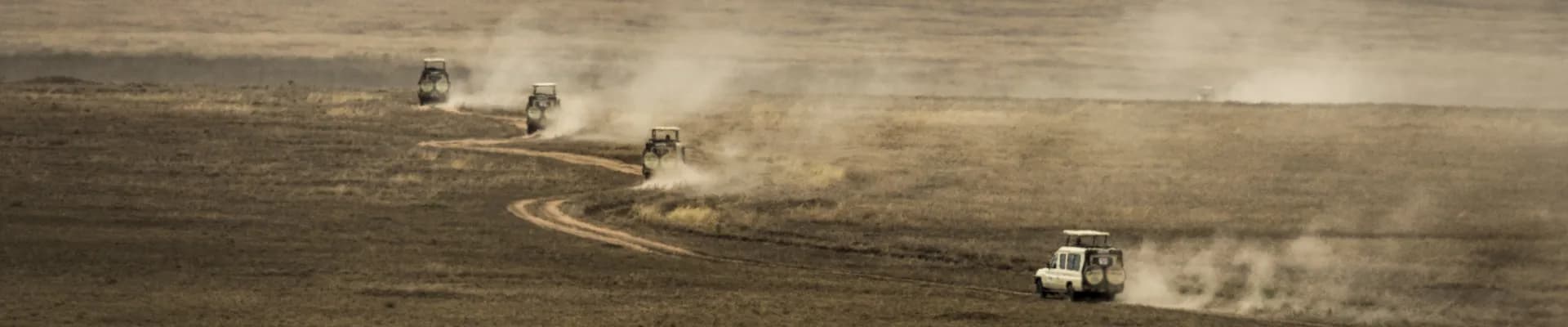
The Serengeti's growing popularity does not mean it feels crowded — at least not if you plan with the ecosystem's scale in mind. A park of nearly 15,000 square kilometres absorbs half a million visitors more gracefully than a reserve a tenth its size. The difference is itinerary design, season choice, and guide quality.
If you can travel in April or May, the long rains bring green landscapes, dramatic skies, and a fraction of peak-season vehicle numbers. Predator activity remains excellent. The Grumeti River crossings begin in late April. Lodge rates drop significantly. It is, as we argued in our green season guide, one of Tanzania's best-kept secrets.
If your dates lock you into July through October, northern Serengeti remains the strategic choice for migration viewing — with the Tanzanian side of the river offering the same spectacle with more breathing room. Book early: the lodges with the best river access fill months ahead.
Whatever your window, the guide matters more than the park name on the brochure. The Serengeti is not a zoo with labelled enclosures — it is a vast, dynamic landscape where animals move according to rain, grass, and instinct. A guide who reads the land, communicates with other vehicles, and understands the migration's current position will deliver a fundamentally different experience from one who simply drives to a known crossing point and waits.
Porcupine Tours is a family-run operator based in Tanzania. Jacqueline and Johannes Weigl have spent years guiding guests through every phase of the migration cycle — from calving in Ndutu to crossings in Kogatende — with the local knowledge that only comes from living in the landscape you show visitors. Every safari we design supports conservation and community programmes, including our partnership with the School of St. Jude in Arusha.
When to Visit the Serengeti
The numbers do not lie: more international travellers are choosing the Serengeti over the Maasai Mara, and they are doing so consistently. That trend reflects something real — better value, greater ecosystem scale, richer multi-park itineraries, and a conservation record that keeps the migration intact for the next generation of visitors.
Kenya's Mara will always have its place in safari history. But if you are planning your first Great Migration trip — or your fifth — and wondering where to invest your time, the data points clearly toward Tanzania. The wildebeest have always known this. Now the visitor numbers confirm it.
Contact us with your travel dates and we will tell you exactly where the herds will be, what you will witness, and which itinerary fits your pace. Browse our Serengeti destination page for park details, or explore all safari itineraries to find your starting point.
The wildebeest have always spent most of their year in Tanzania. For the third consecutive year, international visitors are following their lead.
Original Source: This article is summarized from Daily News Tanzania.
Read the original article