Quick Takeaways (12 min read)
- ▸Willow produced three consecutive twin births in Tarangire between 1992 and 1999, each a male and female pair
- ▸Elephant twins are usually about 1% of conceptions; Amboseli recorded only one set in 1,192 births over 30 years
- ▸In Foley's Tarangire study, 14 of 291 births (about 5%) were twins, with Willow accounting for three of seven sets
- ▸Twin calves faced 43% mortality by age five versus 13% for single births in the same study group
- ▸Tarangire still produces twins: Eloise in 2017 and another pair near the baobabs in 2022
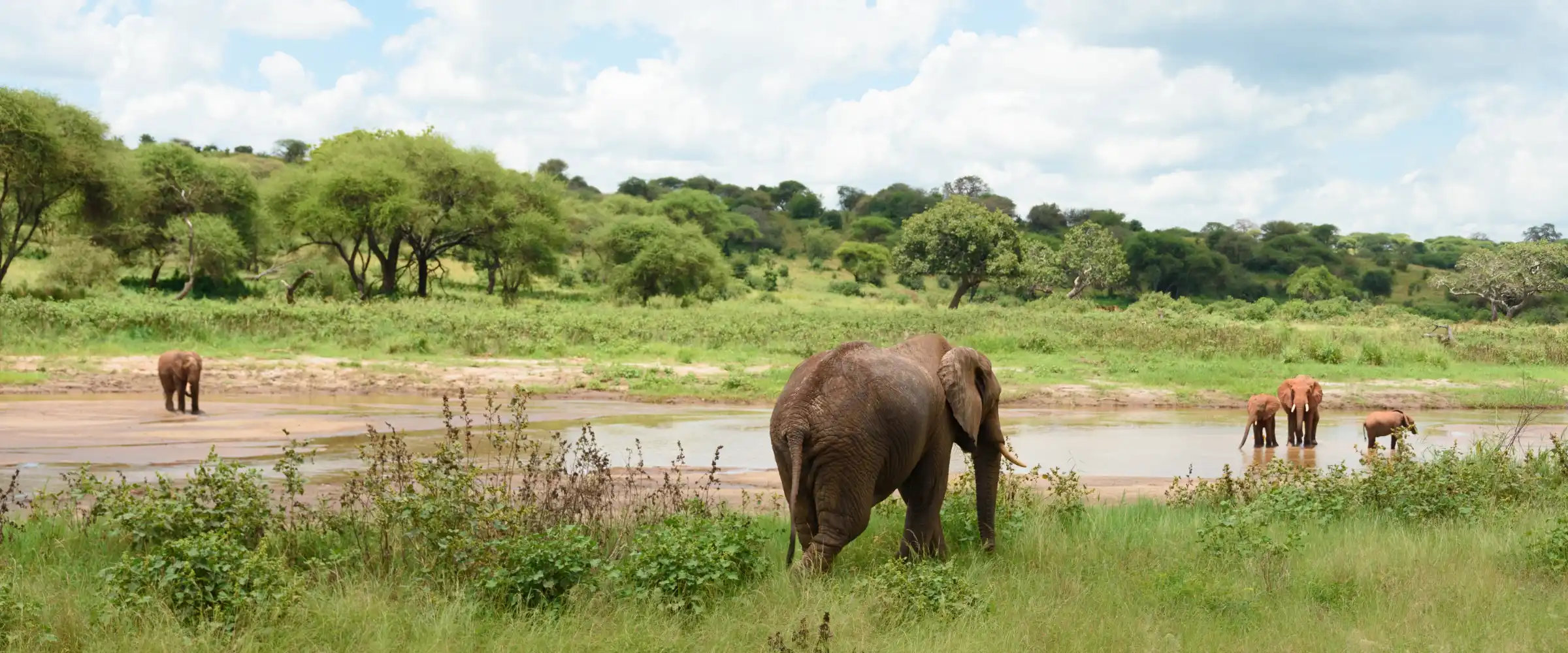
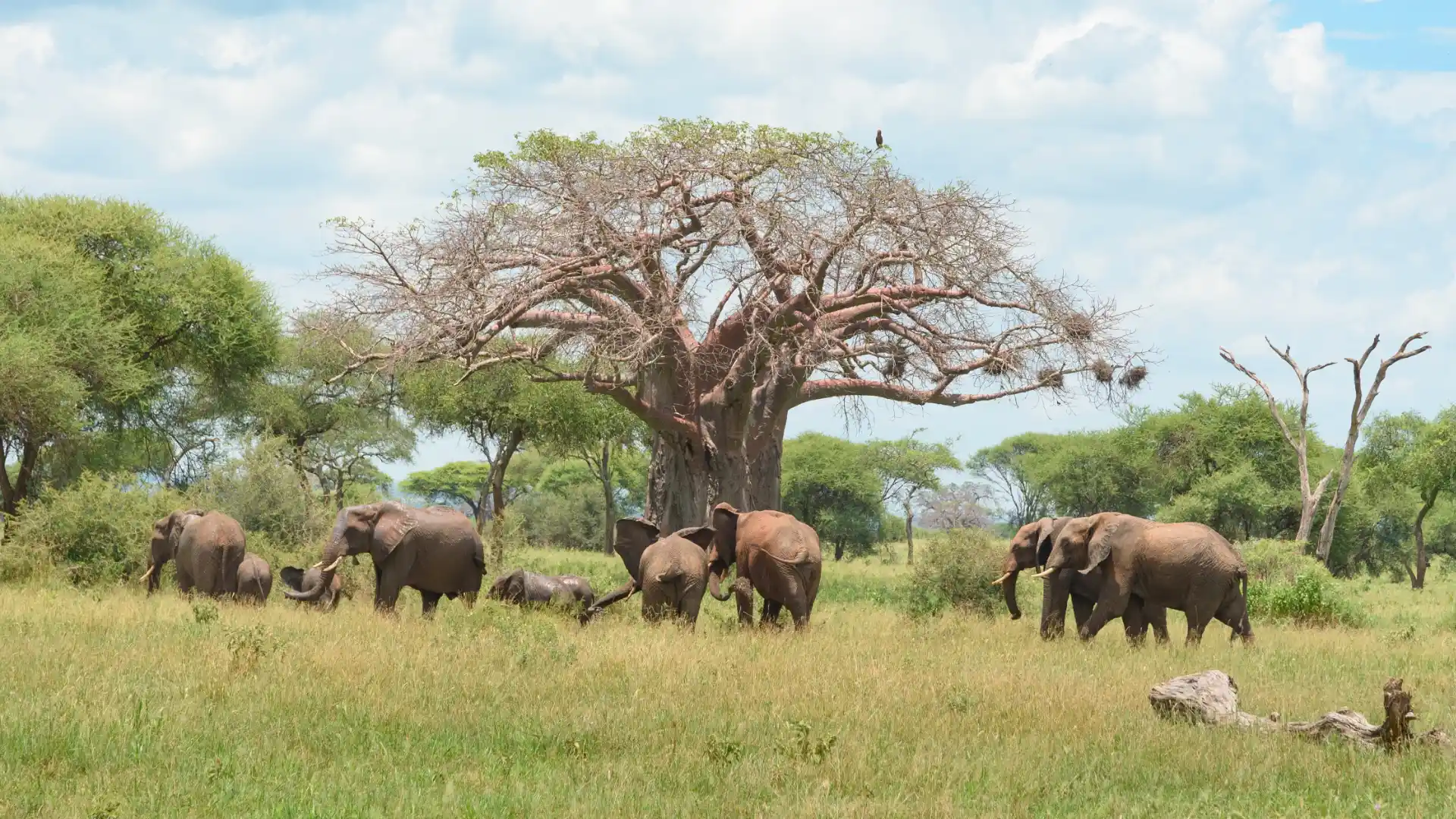
In the dry season of northern Tanzania, elephants gather along the Tarangire River in numbers that can stop a safari vehicle cold. Hundreds gather beneath ancient baobabs. Calves weave between adult legs. Dust rises in soft columns. Somewhere in the scientific record of this extraordinary place sits a single female elephant whose life still astonishes biologists: Willow. Between 1992 and 1999 she gave birth to three consecutive sets of twins, a reproductive feat with almost no parallel in African elephant research. Her story is not a sentimental footnote. It is a window into how rare twinning really is, why Tarangire National Park produced an unusual cluster of twin births, and what that says about recovery after decades of ivory poaching.
Meet Willow of Tarangire
Willow was one of 139 individually known adult female elephants monitored by the Tarangire Elephant Project from the early 1990s onward. Researchers led by Charles Foley kept precise demographic records: who gave birth, when, the sex of each calf, and whether that calf survived. In that careful ledger, Willow stands apart. Most cows produce a single calf every few years. Willow produced twins, then twins again, then twins a third time, all within seven years.
Her first set arrived in mid 1992, one male and one female. Her second set came in the second week of April 1996, again a male and a female. Her third set was born on 21 April 1999, once more one of each sex. The intervals were approximately four years between the first and second births, and exactly three years between the second and third. For a species that typically spaces single births roughly four and a half years apart in nearby Amboseli, that pace alone would be notable. That each birth produced twins moves Willow into a category of her own.
A second female in the same family group, thought to be a close relative and possibly a sister, also produced twins (both female) in 1991, then a single male calf about four years later. That clustering inside one family hints at something researchers know well from human genetics: twinning can run in lineages. Little work has been done on the genetics of twinning in wild elephants, but Willow's family is one of the clearest field cases suggesting predisposition may matter.
Willow produced three consecutive twin births in seven years, each a male and female pair, a pattern almost unmatched in African elephant demography.
Somewhere in the scientific record of Tarangire sits a female elephant whose life still astonishes biologists: Willow.
Why Elephant Twins Are So Rare
African elephants carry pregnancies for roughly 22 months, among the longest of any land mammal. A cow invests enormous energy in a single calf that may nurse for years. Twins multiply that demand. Historical cull data from Uganda suggested that about one percent of conceptions produce twins. Cynthia Moss's long term Amboseli study in Kenya recorded only one set of twins among 1,192 births over three decades. Against that backdrop, Tarangire's numbers look startling.
In Foley's study group, 14 of 291 recorded births (about five percent) were twins: seven sets in total. Five of those sets were mixed male and female; two were twin females. That rate is roughly five times the classic one percent figure and dramatically higher than Amboseli's. Willow alone accounted for three of the seven sets. The remaining mothers included Whisper, Fiona, Eleanor, and Pandora, each contributing to a picture of a population where twinning was not a once in a generation curiosity but a recurring demographic event.
Why does rarity matter for visitors and conservationists alike? Because every twin birth is a high stakes gamble. Two calves competing for milk, attention, and protection raise the odds that one or both will die young. Understanding Willow means understanding both the miracle of the births and the hard arithmetic of survival that followed.
How Rare Are Elephant Twins?
Three Sets of Twins in Seven Years
Willow's calendar of motherhood reads like an improbable rhythm. Mid 1992: first twins. April 1996: second twins. April 1999: third twins. Each time, one male and one female. Researchers watching the 1996 pair over subsequent years documented sibling competition that helps explain why twinning is so costly.
During weaning, the male of that 1996 pair directed aggression at his sister whenever she tried to nurse. If she approached while he was suckling on one side, he would push her away with his head and take that breast himself. He sometimes blocked her even when he was not feeding. She had to wait until he slept or played. Despite those interruptions, she stayed in good condition, with fat covering her lumbar region and no visible depression that would signal malnutrition. Female twin pairs elsewhere in the study showed far less competition and often nursed side by side.
That detail humanises Willow's achievement. Producing twins is only half the story. Raising them means navigating hunger, sibling rivalry, and the constant risk of predators or separation in a moving herd. Willow's body carried three twin pregnancies through Tarangire's seasons. Her calves then had to survive the years that followed.
Willow's 1996 male twin monopolised suckling and pushed his sister away, yet she stayed healthy by nursing only when he slept or played.
Producing twins is only half the story. Raising them means navigating hunger, sibling rivalry, and the constant risk of separation.
Survival Against the Odds
Outcomes for Willow's calves were mixed, and they mirror the wider pattern for twins in the study. The male from her first set died in 1997 at about five years old, cause unknown. Both calves from the 1996 set were still alive when Foley published. The male from the 1999 set died within six months of birth. Across all fourteen twin infants in the Tarangire sample, six (43 percent) died by age five. Single born infants in the same study died at only 13 percent by that age. The difference is statistically stark.
Foley suggested two linked explanations. Mothers of twins may struggle to meet the nutritional needs of two nursing calves. Two infants are also harder to guard, so one may wander or become separated more easily. Male calves, with higher growth rates and greater milk demand, appear especially vulnerable. In Willow's case, two of her three male twins died before age five, while her surviving documented twins included the full 1996 pair.
Another Tarangire episode from the same research period sits beside Willow's story as a reminder of elephant social intelligence. After one mother died, her eight year old son adopted her three month old female twins. He guided them at their pace, let them allo suckle, and taught them what to eat by feeding beside them. The trio stayed healthy through a dry season and was observed for six months before disappearing. Twin births test families. Sometimes the family rewrites the rules of care.
Willow's Twin Timeline
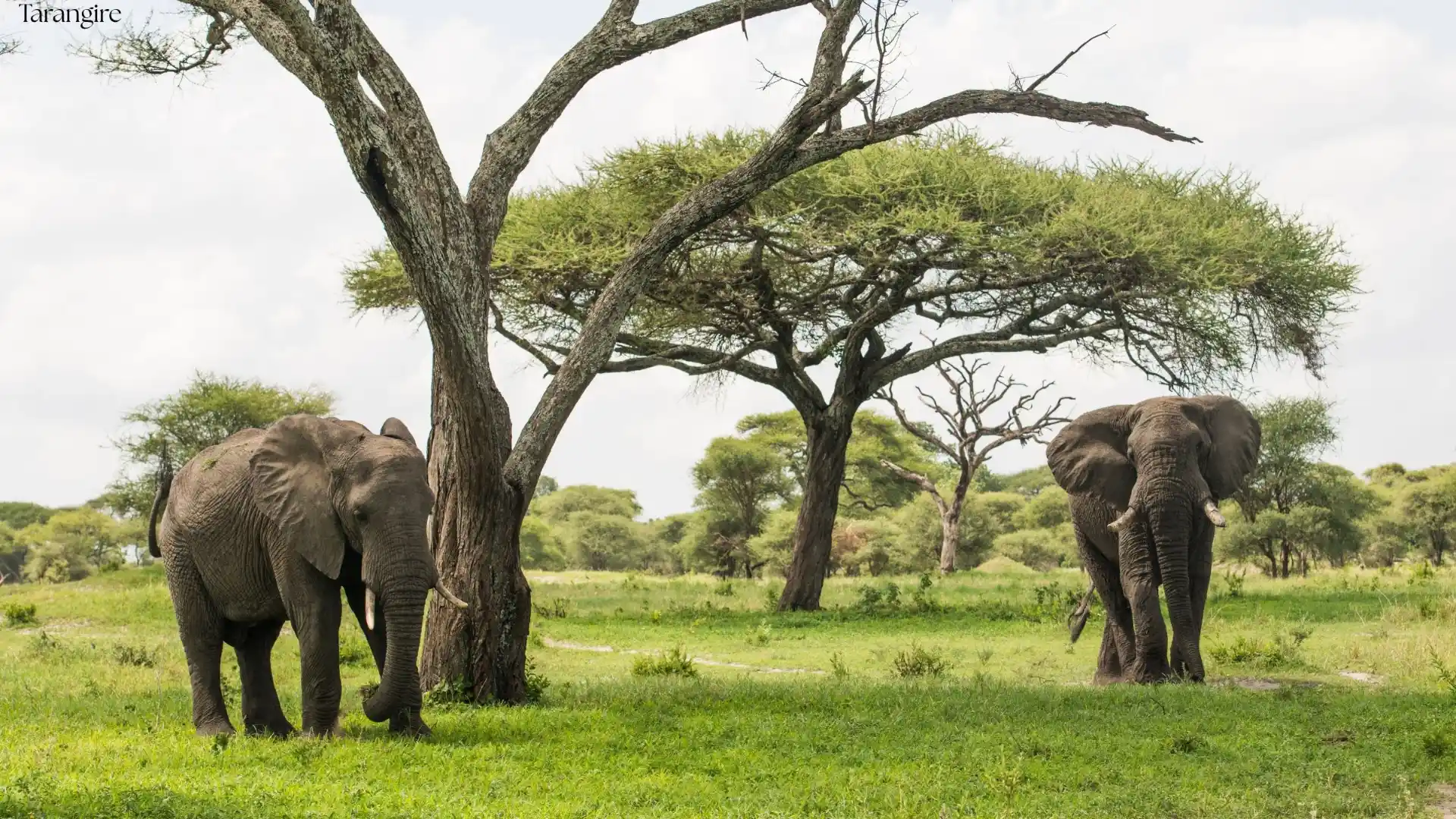
Why Tarangire Became Twin Country
Why did Tarangire, of all parks, produce this surge? Foley pointed to a combination of genetics, released stress after poaching collapsed, and a run of exceptionally wet years.
Tarangire's elephants suffered heavy ivory poaching in the 1970s and early 1980s. Families abandoned traditional seasonal dispersal beyond park boundaries and stayed inside year round. Some gathered in defensive herds of 300 or more. After the 1989 ivory trade ban, poaching pressure eased. Most families resumed normal movement patterns. External stressors that had suppressed reproduction fell away, and the population grew rapidly. From 1994 onward, females and infants increased at about ten percent per year.
Then came rain. From 1996 to 1998, Tarangire averaged about 1,000 mm of rainfall annually against a normal average near 680 mm, linked in part to El Niño. Abundant vegetation kept females in excellent body condition year round. Postpartum oestrus arrived sooner. Non twinning females in 1996 showed an average interbirth interval of about 3.37 years, compared with 4.5 years in Amboseli. Intervals after twin births in Tarangire (3, 3, 4, and 6 years among the four cases with follow up) were not wildly different from those Amboseli singles, which is remarkable given the double load of twins.
Rain alone cannot explain everything. Four of the seven twin sets were born before or during 1996, before mothers could fully benefit from the best forage years. Genetic predisposition within certain families, Willow's among them, likely interacted with ecological release. Tarangire became twin country because biology, history, and climate briefly aligned.
Tarangire's female and infant elephants grew at about 10% per year after poaching eased, as wet El Niño years shortened birth intervals and twinning clustered in predisposed families.
Tarangire became twin country because biology, history, and climate briefly aligned.
Twins Still Born in Tarangire Today
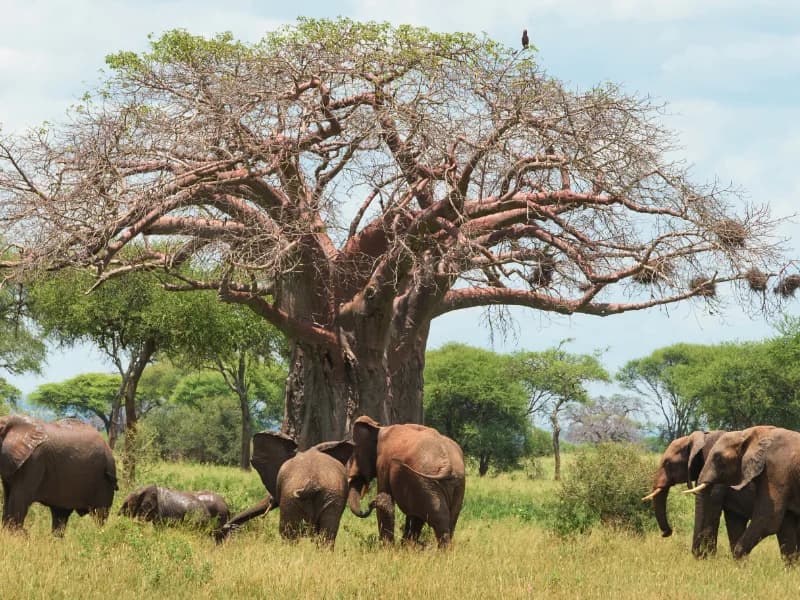
Willow's era is not a closed chapter. Tarangire has continued to produce rare twin calves that draw scientific and public attention. In August 2017, a matriarch named Eloise, estimated at about 57 years old, gave birth to a male and female pair. Wildlife Conservation Society researchers described her as the oldest known elephant mother to deliver twins. The calves were later nicknamed Elon Tusk and Emma in popular reporting. In 2022, another cow bore twins near the park's baobab heavy Mibuyu Mingi area. In 2025, park managers discussed collaring those twin sets with TAWIRI so visitors and researchers could track them more reliably.
Each new twin birth renews the same questions Willow raised: how often does it happen here, what helps calves survive, and what does Tarangire's elephant density mean for the northern circuit? The park remains one of East Africa's great elephant strongholds. In the dry months, when water concentrates wildlife along the river, herds can feel endless. Baobabs frame the scene. Dust and light turn every sighting cinematic. For guests on a 4-Day Tarangire and Ngorongoro Safari or a longer 5-Day Northern Circuit, those herds are the emotional centre of the trip. Knowing Willow's story adds a quieter layer: somewhere in this landscape, exceptional mothers have rewritten the odds more than once.
Decades after Willow, Tarangire still produces twin calves, including Eloise's 2017 pair and another set near the baobabs in 2022.
Tarangire Twins After Willow
Planning Your Tarangire Elephant Safari
If Willow's story makes you want to stand among Tarangire's herds, plan around water, season, and time of day. The dry season from June through October concentrates elephants along the Tarangire River and permanent springs. Game drives then can deliver the densest elephant viewing on the northern circuit. The green season, which we unpack in our green season safari guide, scatters animals into lush vegetation and rewards photographers with dramatic skies and fewer vehicles. Both seasons work. Dry season maximises herd spectacle.
Tarangire pairs naturally with Ngorongoro Crater and the Serengeti. A short itinerary such as our 4-Day Tarangire and Ngorongoro focuses on elephant country and the caldera. Jewels of Tanzania adds Serengeti days for a fuller northern circuit. Guests who want balloon perspectives over baobab country may also enjoy reading about Tarangire's place in aerial safari history in our Tarangire balloon world record piece. Broader conservation context for Tanzania's wildlife recovery sits in our conservation success overview.
Practical tips from the vehicle: give breeding herds space, especially cows with young calves. Twins, if you are extraordinarily lucky to see them, will look smaller and may nurse in turns. Early morning and late afternoon light flatter the orange soil and grey hides. Bring a long lens, but also put the camera down for a moment. Tarangire's gift is scale: the river, the baobabs, and families moving with a calm that belies how hard survival can be.
Porcupine Tours is a family run operator based in Tanzania. Our guides know the river loops, the seasonal shifts, and how to linger with elephant families without crowding them. Willow's twins are history written in field notes. The living herds are waiting on the next game drive.
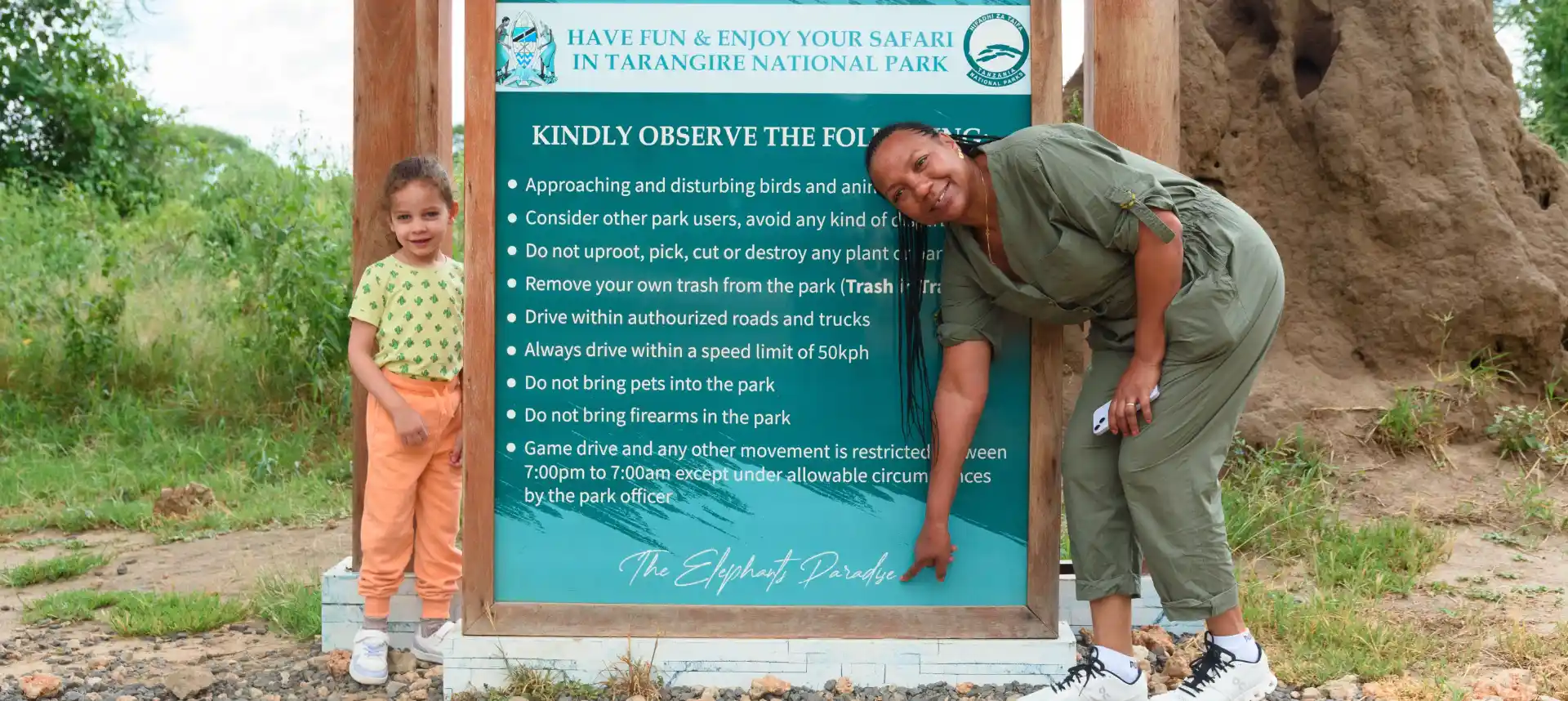
Willow's twins are history written in field notes. The living herds are waiting on the next game drive.
Contact us with your dates and we will build a Tarangire centred itinerary that matches the season you choose. Explore our Tarangire destination page for park details, or browse all safari itineraries to find your starting point.
Original Source: This article is summarized from Pachyderm Journal.
Read the original article