Quick Takeaways (16 min read)
- ▸Safari first, beach last is the default. End on Zanzibar so early-morning game drives do not cap your holiday.
- ▸Ten to eleven days is the sweet spot: six days northern circuit safari plus four to five nights on Zanzibar.
- ▸A bush flight from the Serengeti direct to Zanzibar skips six to eight hours of driving and lands you on the coast in about an hour.
- ▸June to October aligns peak wildlife viewing with ideal beach weather. January to February adds calving season drama.
- ▸One Tanzania eVisa covers mainland and Zanzibar, but ZIC inbound insurance (USD 44) is required before clearing Zanzibar immigration.
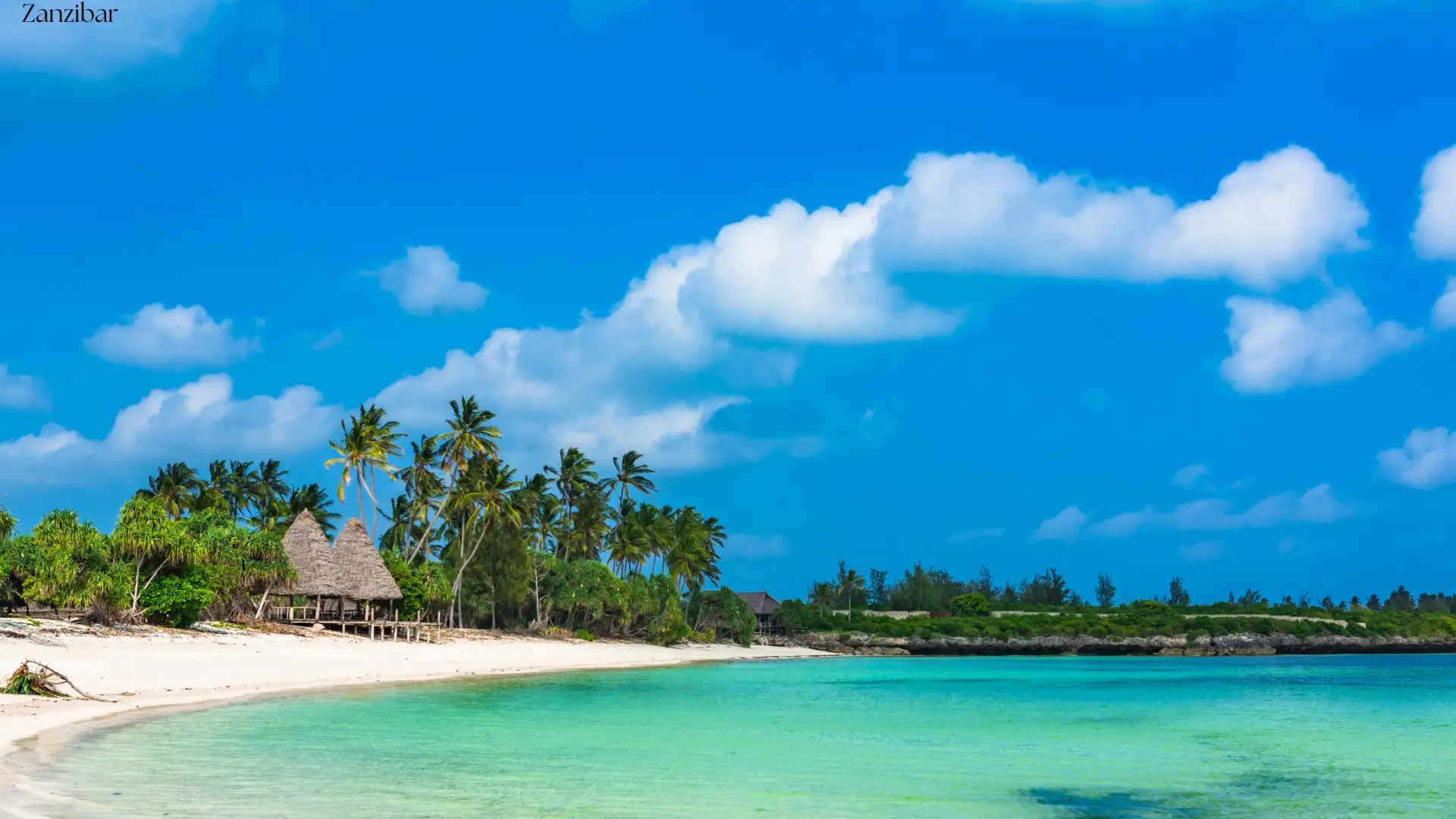
Tanzania is one of the few countries on Earth where you can watch a lion hunt at dawn and swim in the Indian Ocean by afternoon, without changing passports, currencies, or tour operators. Combining a northern circuit safari with a Zanzibar beach extension is the single most requested itinerary shape we hear from guests at Porcupine Tours. Honeymooners want wildlife drama followed by hammock time. Families want variety that keeps children engaged. First-time Africa visitors want the greatest hits in one journey. The combination works because Tanzania built the infrastructure to support it: daily flights between the safari circuit and Zanzibar, one eVisa covering mainland and archipelago, and a northern safari circuit that pairs naturally with an island that sits just 430 kilometres off the coast.
This guide covers everything you need to decide whether a bush-to-beach trip is right for you, and how to structure it. We address the question every planner asks: safari first or beach first? We break down realistic day counts, flight options, which parks to include, where to stay on Zanzibar, and how to time the combo across seasons. For visas, Zanzibar mandatory insurance, park fees, and packing, see our dedicated Tanzania safari planning guide. This article focuses on the combination itself.
Why Combine Safari and Zanzibar
A Tanzania safari demands early mornings, dusty roads, and sustained attention. Game drives start before sunrise. Binoculars stay glued to the horizon. By the sixth day, even the most enthusiastic wildlife lover welcomes a change of pace. Zanzibar provides that counterweight: white sand, turquoise water, spice-scented air, and a culture layered with Swahili, Arab, and Indian history. The psychological arc matters. You earn the beach through days in the bush, and the beach feels earned rather than indulgent.
Logistically, the pairing is cleaner than most multi-country alternatives. Kenya safari plus Seychelles beach requires two visa regimes and an international connection. South Africa safari plus Mauritius adds long-haul positioning. Tanzania keeps everything inside one nation. Your eVisa covers both mainland parks and the Zanzibar archipelago. Your safari operator can book the connecting flight to Zanzibar as part of the same itinerary. You do not need a second specialist.
The wildlife on a northern circuit safari is world-class: elephant herds beneath baobabs in Tarangire, the Big Five on the floor of the Ngorongoro Crater, and the endless predator drama of the Serengeti. Zanzibar adds a dimension no park can replicate: reef snorkelling, dhow sunsets, Stone Town alleyways, and the slow rhythm of island time. Together they deliver what travel psychologists call contrast reward: the beach feels better because the safari was intense, and the safari feels more meaningful because it was not the entire trip.
Tanzania is one of the only destinations where world-class savannah wildlife and Indian Ocean beaches coexist inside a single country, visa, and operator relationship.
You earn the beach through days in the bush, and the beach feels earned rather than indulgent.
Safari First or Beach First
Most experienced operators, including Porcupine Tours, recommend safari first and beach last. The reasoning is experiential, not bureaucratic. Safari days are structured and demanding. You wake at 5:30am, ride corrugated tracks, scan for movement in golden grass, and process extraordinary sightings until dusk. That intensity is exhilarating, but it is not restful. Ending on Zanzibar lets your body decompress. You sleep late. You swim. You stop checking your watch. The holiday finishes on a high note of ease rather than a final push through dust and early alarms.
Safari-first routing also matches how most international flights work. You fly into Kilimanjaro International Airport (JRO) near Arusha, complete your wildlife circuit, take a one-hour domestic flight to Zanzibar, and depart from Zanzibar Abeid Amani Karume International Airport (ZNZ). Many European charter and scheduled routes serve ZNZ directly during high season, making an island departure convenient. Your bags transition from safari khaki to beach linen in one logical direction.
Beach-first routing is valid in specific circumstances. Travellers arriving severely jet-lagged from long-haul flights, particularly from North America or East Asia, sometimes prefer two or three recovery days on Zanzibar before the 5am game drives begin. Honeymoon couples who prioritise immediate intimacy over wildlife may want the beach opening. Guests travelling during April or May, when heavy rains affect both coast and interior, occasionally start on the beach during lighter morning showers and move inland as the season shifts, though this is a compromise, not an ideal.
Beach-first logistics carry two practical wrinkles. You must purchase Zanzibar Insurance Corporation inbound cover before clearing immigration at ZNZ. Currently USD 44 per adult via inbound.visitzanzibar.go.tz. Safari-first travellers buy this before their connecting flight to the island; beach-first travellers buy it on arrival. The cost is identical; only the timing changes.
If you choose beach-first, your international departure airport also changes. Most safari circuits end near JRO or Arusha Municipal Airport (ARK). Unless you fly back to Zanzibar for your return flight, adding another domestic sector, you will depart from Kilimanjaro, not the beach. That works well if your international ticket is already JRO-based. It is awkward if you booked a ZNZ departure expecting to finish on the sand. Safari-first avoids this friction entirely: wildlife, then beach, then international flight from Zanzibar.
Safari First vs Beach First
Safari-first is the default for good reason: you finish relaxed on the beach, and your international departure from ZNZ matches how most European routes are booked.

How Many Days for Each
The sweet spot for a combined trip is ten to eleven days total. Shorter than eight days feels rushed. You either shortchange the wildlife or cut the beach to a token two nights. Longer than fourteen days is wonderful if you have the time, but most working professionals optimise around ten.
A proven split is six days safari plus four to five days beach. Six safari days covers the northern circuit properly: one night Arusha, Tarangire, Serengeti (two nights minimum), Ngorongoro Crater descent, and the transfer day to the airport. Rushing this to four safari days means skipping Tarangire or compressing Serengeti to a single night. Doable, but you sacrifice the park that many guides consider the most underrated on the circuit. Four to five beach nights allows one slow day, one activity day (Stone Town, spice tour, or snorkelling), and genuine rest without clock-watching.
Our 11-Day Safari and Zanzibar itinerary follows exactly this shape: six days wildlife through Tarangire, Serengeti, and Ngorongoro, then five nights at Zanzibar Queen Hotel on the coast. Our Migration and Zanzibar package compresses to ten days with a migration focus: Tarangire, Lake Manyara, Ngorongoro, three Serengeti days, then three beach nights in Nungwi.
Minimum viable durations: seven days total (four safari, three beach) works for repeat visitors who know they want both but have limited leave. Below seven days, choose one experience. A five-day safari alone outperforms a four-plus-two split that leaves both halves feeling incomplete.
Children generally need the longer format. Game drives demand patience from age six upward. The beach days that follow reward that patience generously. Families consistently report that the combination keeps kids engaged better than safari alone.
Best Safari Circuit for Zanzibar
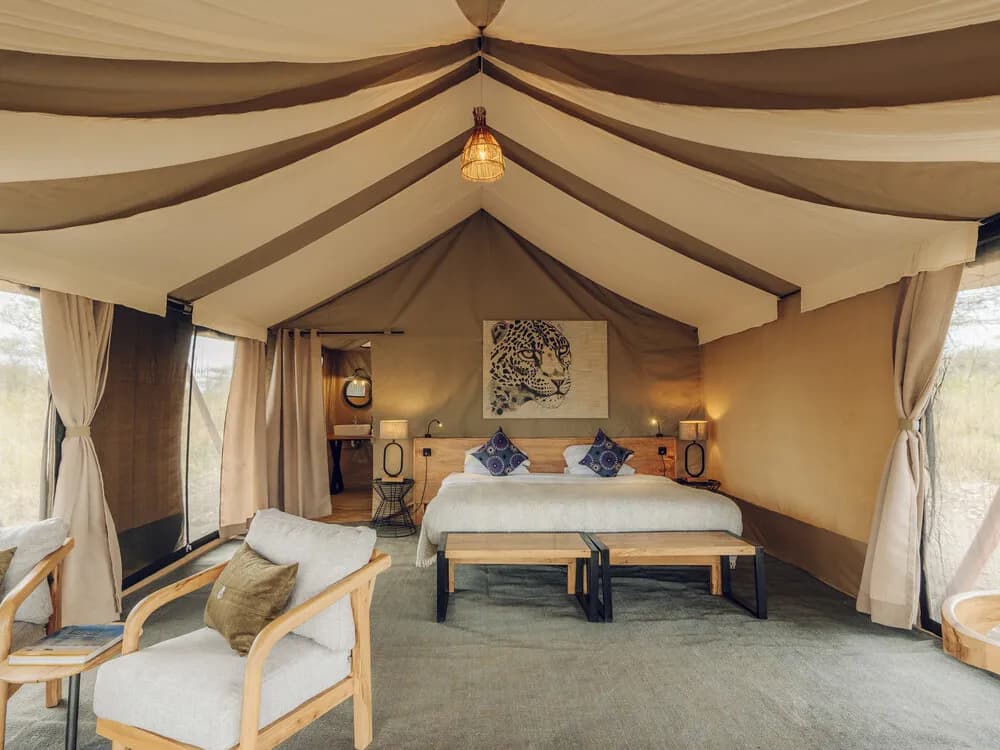
The northern circuit is the default and the correct choice for most bush-to-beach itineraries. Tarangire, Serengeti, and Ngorongoro sit within a drivable loop from Arusha, and flights connect the region to Zanzibar in roughly one hour. No circuit in Africa offers this density of iconic wildlife so close to a world-class beach.
Tarangire deserves at least one full day. During dry season from June through October, elephant concentrations along the river can exceed anything you will see elsewhere in the north. The baobab landscapes are photogenic in ways the open Serengeti plains are not. Skipping Tarangire to save a day is a false economy for first-time visitors.
Serengeti requires two nights minimum, three if you are chasing migration position. The park is vast. One night confines you to the central Seronera area, which is excellent but limited. Two nights allows a fuller picture. If your dates align with river crossings or calving season, three nights becomes essential. Our Great Migration guide explains how herd position shifts month by month.
Ngorongoro Crater is a single morning. Descend at dawn, spend four to five hours on the caldera floor among rhino, hippo, and lion, and ascend before afternoon clouds obscure the rim. Our Ngorongoro Crater guide covers what to expect on the floor. The crater is not a multi-day destination. It is a concentrated highlight that pairs perfectly with Serengeti time.
Lake Manyara is optional. The park is compact and famous for tree-climbing lions and flamingos. Including it adds a day. Our Migration and Zanzibar itinerary features Manyara; our 11-day safari and Zanzibar route skips it in favour of deeper Serengeti time. Both are defensible choices.
The southern circuit (Nyerere, Ruaha, Mikumi) pairs with Zanzibar for adventurous travellers who want remoteness before the beach. Flights from Nyerere to ZNZ take longer and run less frequently. This is a specialist combination, not the standard first-timer path.
Six safari days and four to five beach nights is the split we recommend most often: enough wildlife to feel you have seen Tanzania, enough sand to feel you have rested.
Flying Between Safari and Zanzibar
The transfer from bush to beach is where many travellers underestimate the logistics, and where the right flight choice transforms the experience.
The standard route: drive out, fly to Zanzibar
Most northern circuit combos end with a road transfer from the Serengeti or Ngorongoro area back through the highlands to Arusha Municipal Airport (ARK) or Kilimanjaro International (JRO), followed by a scheduled one-hour flight to Zanzibar. Precision Air, Air Tanzania, Auric Air, and Flightlink operate multiple daily departures in high season. Our 11-Day Safari and Zanzibar follows this pattern: after the crater descent, guests transfer via Arusha to the airport and fly to the coast. The domestic sector is included in the package. Confirm this when comparing operator quotes.
The drive from central or northern Serengeti back to Arusha is the strenuous part. Depending on where you finish in the park, this overland transfer can consume a full day, six to eight hours on corrugated tracks through the Ngorongoro Conservation Area highlands before you reach tarmac. It is scenic, and your guide will stop for wildlife along the way, but it is a long sit after several days of early alarms. For guests who have already absorbed enough driving, there is a better option.
The bush flight: Serengeti straight to Zanzibar
Bush aviation operators including Coastal Aviation, Safari Airlink, and Auric Air run scheduled and charter services from Serengeti airstrips directly to Zanzibar (ZNZ). You board a small Cessna Caravan at Seronera (central Serengeti), Grumeti (western corridor), or Kogatende (northern Serengeti during migration season) and land on the coast roughly one hour later, skipping the entire drive back to Arusha.
The flight itself is part of the experience. Aircraft cruise at 2,000 to 3,000 feet, low enough to watch wildebeest herds and elephant trails from the window on departure. Many guests tell us the bush flight rivalled their best game drive as a highlight of the trip. You step off the plane at Zanzibar, transfer to your beach hotel, and are in the ocean by mid-afternoon, a transition that would otherwise take two days of driving and airport connections.
Bush flights carry strict baggage rules: 15 to 20 kilograms in soft-sided bags only, no hard suitcases. Pack a separate soft bag with beach clothes before your final Serengeti morning. Your safari vehicle and guide will return to base independently. Operators account for this vehicle repositioning in the overall quote. Bush sectors cost more than scheduled jets because of aircraft type and logistics, but the time saved and the aerial perspective justify the premium for many travellers, particularly after three or more nights in the bush.
We can build either routing into a custom combo. The drive-and-fly option through Arusha suits most budgets and works seamlessly. The Serengeti-to-Zanzibar bush flight suits travellers who want to maximise beach time and avoid one more long transfer day. Our domestic flights guide covers operators, baggage limits, and booking lead times in full detail.
A bush flight from the Serengeti directly to Zanzibar replaces six to eight hours of overland driving with a one-hour hop, and the aerial views over the plains are a safari memory in their own right.
Bush Flight Serengeti to Zanzibar
Where to Stay on Zanzibar
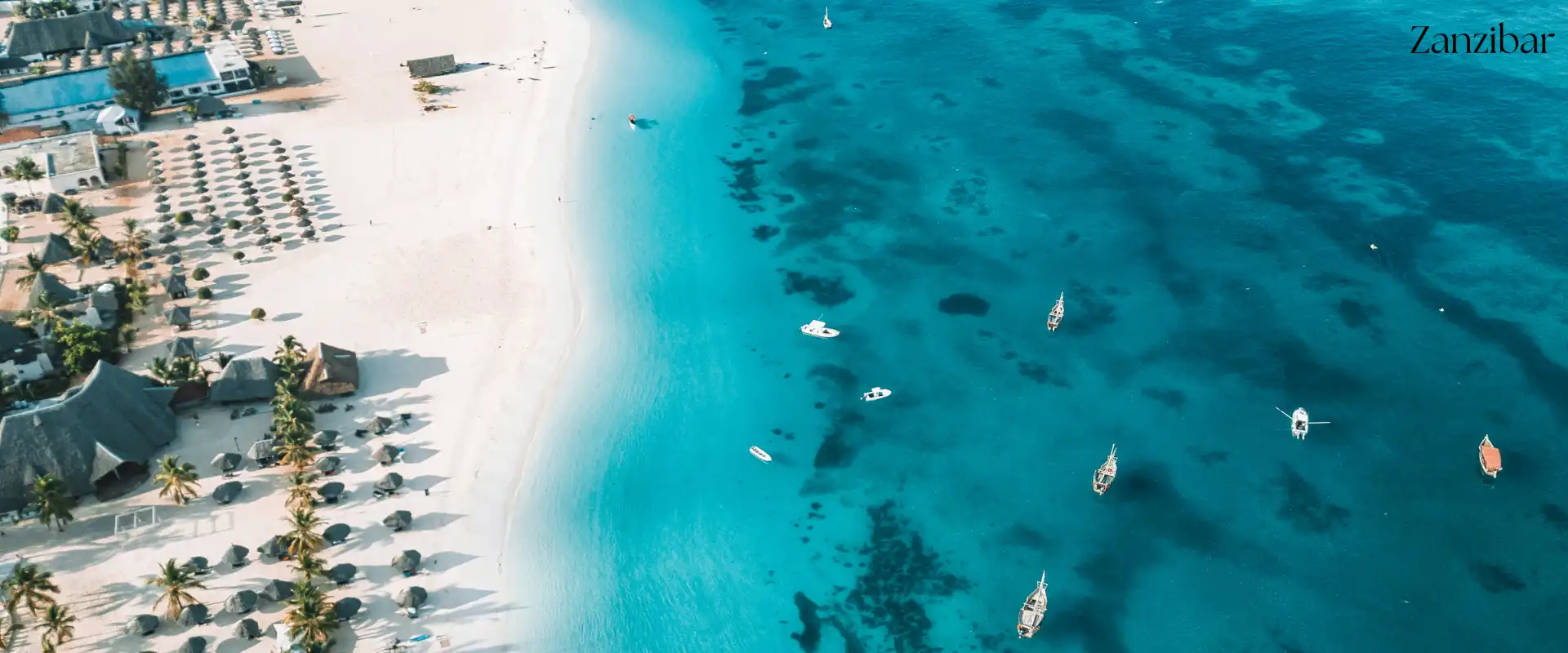
Zanzibar is not one beach. It is an archipelago of distinct coasts with different characters. Where you stay shapes the second half of your trip as much as lodge choice shapes the first.
The north coast around Nungwi and Kendwa offers the classic Indian Ocean postcard. Non-tidal swimming, white sand, sunset dhow cruises, and a social atmosphere. Nungwi is busier but has the widest restaurant and activity selection. Our Migration and Zanzibar itinerary places guests here for direct beach access after safari. Kendwa, minutes south, is slightly quieter with the same swimming conditions.
The east coast (Paje, Dongwe, Matemwe) trades non-tidal convenience for boutique intimacy. The tidal range creates shallow lagoons at low water and swimming at high tide. Paje is East Africa's kitesurfing capital. Matemwe faces Mnemba Atoll, one of the finest snorkelling and diving reefs in the region. Choose east coast if you want quieter luxury and do not mind planning swims around the tide.
Stone Town deserves at least one night, whether at the start or end of your beach stay. The UNESCO-listed old city is a labyrinth of carved doors, spice markets, and rooftop restaurants. A walking tour and a spice plantation visit add cultural depth that pure resort time cannot. If your beach hotel is north or east, slot Stone Town as a day trip or a one-night stopover before your flight home.
Mid-range beach hotels such as Zanzibar Queen Hotel, used on our 11-day combo, deliver comfortable beachfront stays without the ultra-luxury price tag. Premium options like Zuri Zanzibar or Baraza Resort suit honeymooners wanting spa and privacy. Match the beach property to the energy level you need after safari, not the other way around.
Full destination detail lives on our Zanzibar destination page.
North coast for all-day swimming and social energy; east coast for boutique quiet and reef access; Stone Town for culture. Most combos benefit from mixing two of the three.
Best Time for the Combo
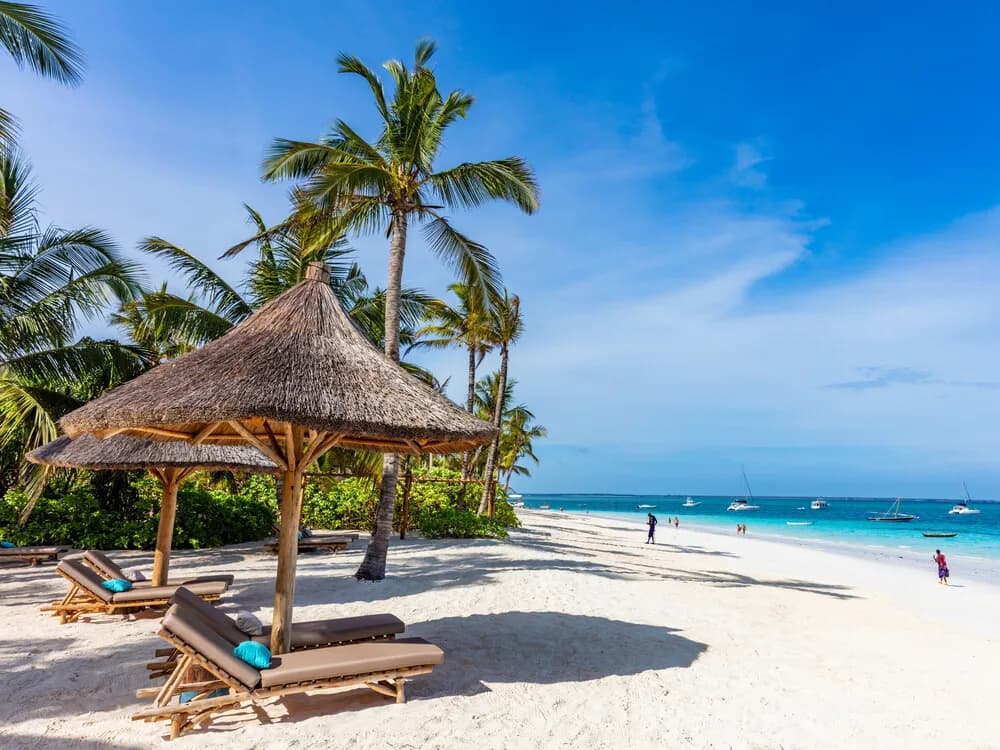
June through October is the gold standard. Dry season concentrates wildlife around waterholes on the mainland, making game viewing predictable and excellent. Zanzibar enjoys low humidity, calm seas, and reliable sunshine. European school holidays push prices up in July and August, but the experience justifies the premium. Book six to twelve months ahead for peak weeks.
January through February is the second peak. Southern Serengeti calving season draws visitors for newborn wildebeest and predator action. Zanzibar is hot and sunny, ideal beach weather. This window suits travellers who want both migration drama and warm-weather coast time.
November and March are shoulder months. Short rains green the landscape, reduce crowds, and lower lodge rates. Wildlife viewing remains strong. Zanzibar sees occasional afternoon showers but plenty of clear mornings. Strong value for travellers who prioritise experience over perfect weather.
April and May are the compromise season. Long rains affect both mainland parks and the Zanzibar coast. Roads in the Serengeti can be challenging. Beach resorts offer their lowest rates. If you must travel during these months, safari-first routing is preferable. Complete the wildlife portion in early April and reach the beach as rains lighten toward late May. Our green season safari guide makes the case for low-season mainland travel in more detail.
December bridges the seasons. Festive demand raises prices. Weather is generally good on both coast and savannah. Plan early if you want Christmas or New Year on Zanzibar after safari.
Best Months for Safari Plus Zanzibar
Plan Your Bush-to-Beach Trip
The best Tanzania safari and Zanzibar combinations are not assembled from generic templates. They are timed to where the wildebeest are, matched to your fitness for early mornings, and paced so the beach genuinely restores you. Porcupine Tours is a family-run operator based in Tanzania. We route guests through the northern circuit year-round and handle the connection to Zanzibar, whether by scheduled flight via Arusha or bush plane direct from the Serengeti.
If you want the classic introduction (Tarangire, Serengeti, Ngorongoro, then five nights on the coast), explore our 11-Day Safari and Zanzibar itinerary. If migration is your priority with a beach coda, the Migration and Zanzibar package targets herd position in the Serengeti before Nungwi. For administrative preparation (eVisa, ZIC insurance, park fees, tipping, and packing), work through our Tanzania safari planning guide alongside this article.
Contact us with your travel dates, group size, and whether you lean safari-first or beach-first. We will build a timeline that matches the season, advise on drive-and-fly versus bush-flight routing from the Serengeti, and recommend a Zanzibar coast that fits the energy you want after the bush. Tanzania's greatest gift to travellers is this pairing: wild and calm, dust and salt, lion roar and ocean hush, in a single, seamless journey.
[PULL_QUOTE:Tanzania's greatest gift to travellers is this pairing: wild and calm, dust and salt, lion roar and ocean hush, in a single, seamless journey.]
Written by Porcupine Tours — Your local Tanzania safari experts
Get in touch to plan your safari