Quick Takeaways (16 min read)
- ▸Shira Camp sits at 3,840m on the ancient Shira volcanic caldera
- ▸Half-day trek from Morum Barrier Gate (3,500m) to Shira 1 Camp (3,610m)
- ▸Experience 80% of Kilimanjaro's landscapes without summit pressure
- ▸Shira Plateau is 500,000 years older than Kibo peak
- ▸Ideal for families, photographers, and altitude-sensitive travelers
When people think of Kilimanjaro, they picture summit photos at Uhuru Peak, the iconic 5,895-meter pinnacle of Africa. But what if I told you that some of the mountain's most spectacular landscapes, fascinating geology, and authentic trekking experiences lie thousands of meters below that famous sign? The half-day trek to Shira Camp on Mount Kilimanjaro offers an alternative for travelers who want to experience Africa's highest mountain without the extreme altitude, grueling summit push, or week-long commitment. At 3,840 meters, Shira Camp sits on one of the world's highest plateaus, surrounded by volcanic history and breathtaking scenery. Thanks to vehicle access to Morum Barrier Gate at 3,500m, this becomes an achievable half-day adventure and is perfect for families, photographers, time-constrained travelers, or anyone who believes the journey matters more than the destination.
The Ancient Shira Volcano
Mount Kilimanjaro isn't a single mountain, it's a complex of three distinct volcanic cones formed over millennia of eruptions and geological evolution. Most people know Kibo, the youngest and highest peak crowned with glaciers and the famous summit. Fewer have heard of Mawenzi, the jagged, craggy peak to the east. But the oldest and perhaps most fascinating is Shira, a volcano that collapsed catastrophically around 500,000 years ago, leaving behind a spectacular plateau that now forms the mountain's western flank.

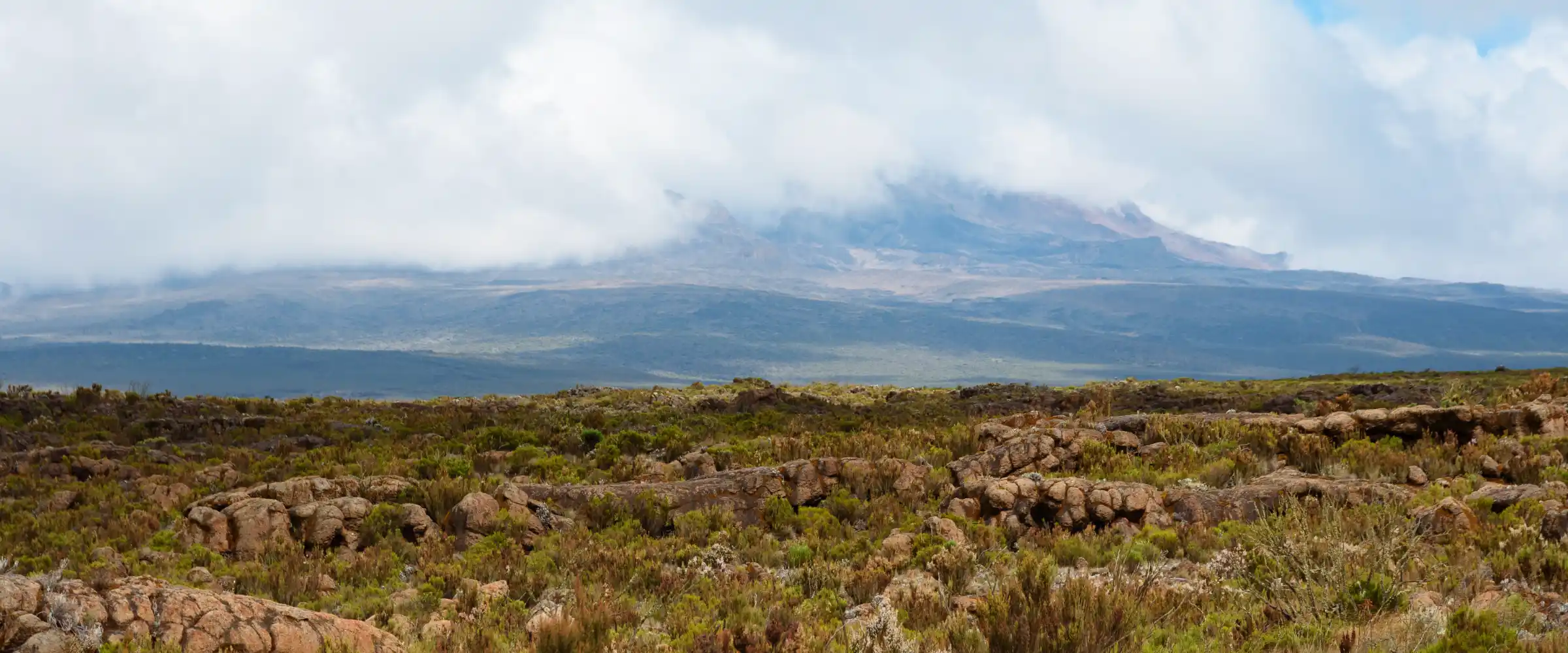
The Shira Plateau stretches for roughly 13 kilometers at an average elevation of 3,600-3,800 meters. It's a high-altitude desert of volcanic rock, alpine moorland, and stunning vistas—remnants of what was once a towering volcanic peak in its own right. Geologists believe Shira reached heights similar to Kibo before its violent collapse created the caldera we see today. Standing on the plateau, you're literally inside the remains of an ancient volcano, surrounded by the rim walls that once enclosed its fiery crater.
The volcanic soil is still visible everywhere: black, red, and ochre rocks scattered across the moorland. Lava flows have frozen into twisted formations. Parasitic cones (small volcanic hills formed by secondary eruptions) dot the landscape. This isn't just trekking for the sake of altitude, it's walking through 500,000 years of earth history, reading the story written in stone and soil. For geology enthusiasts, Shira is a living textbook. For everyone else, it's simply awe inspiring.
Shira collapsed 500,000 years ago, creating one of the world's highest plateaus and leaving behind a volcanic wonderland frozen in time.
Five Vegetation Zones: A Botanical Journey
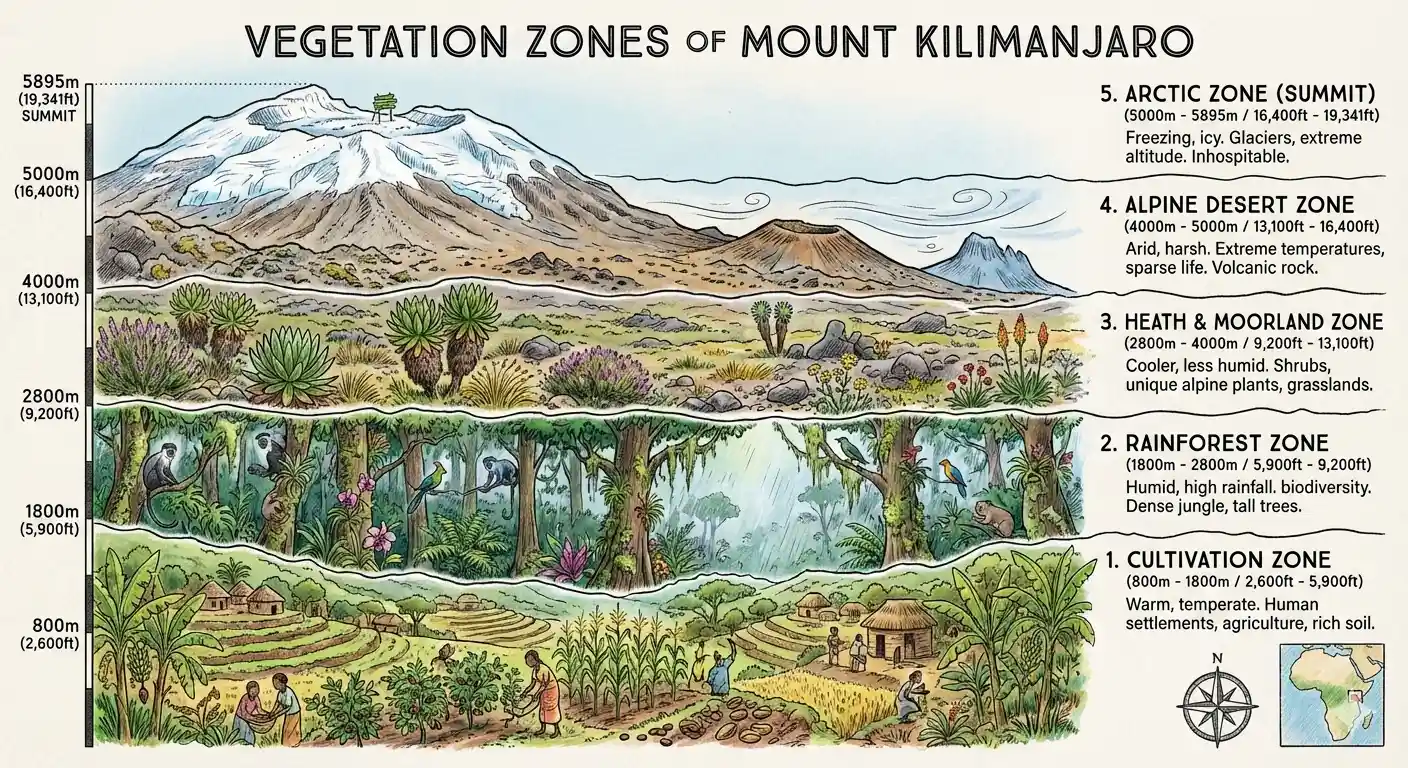
One of Kilimanjaro's most remarkable features is its distinct vegetation zones. Ecological bands that change dramatically with altitude, creating a journey from tropical rainforest to alpine desert. The trek to Shira Camp passes through nearly all of them, offering an extraordinary lesson in how plants adapt to altitude, rainfall, and temperature.
Cultivation Zone (800-1,800m)
The trek typically begins in the foothills around Londorossi Gate, passing through farmland where local Chagga people cultivate coffee, bananas, and maize. This is the warm, fertile zone where human settlement meets wilderness.
Rainforest Zone (1,800-2,800m)
As you enter Kilimanjaro National Park, you're immediately swallowed by dense montane rainforest. Giant trees draped in moss and lichen create a canopy overhead. The air is humid and filled with bird calls, watch for colobus monkeys swinging through branches and blue monkeys foraging on the forest floor. This zone receives abundant rainfall, creating lush, almost mystical conditions where everything is green and dripping.
Heather and Moorland Zone (2,800-4,000m):
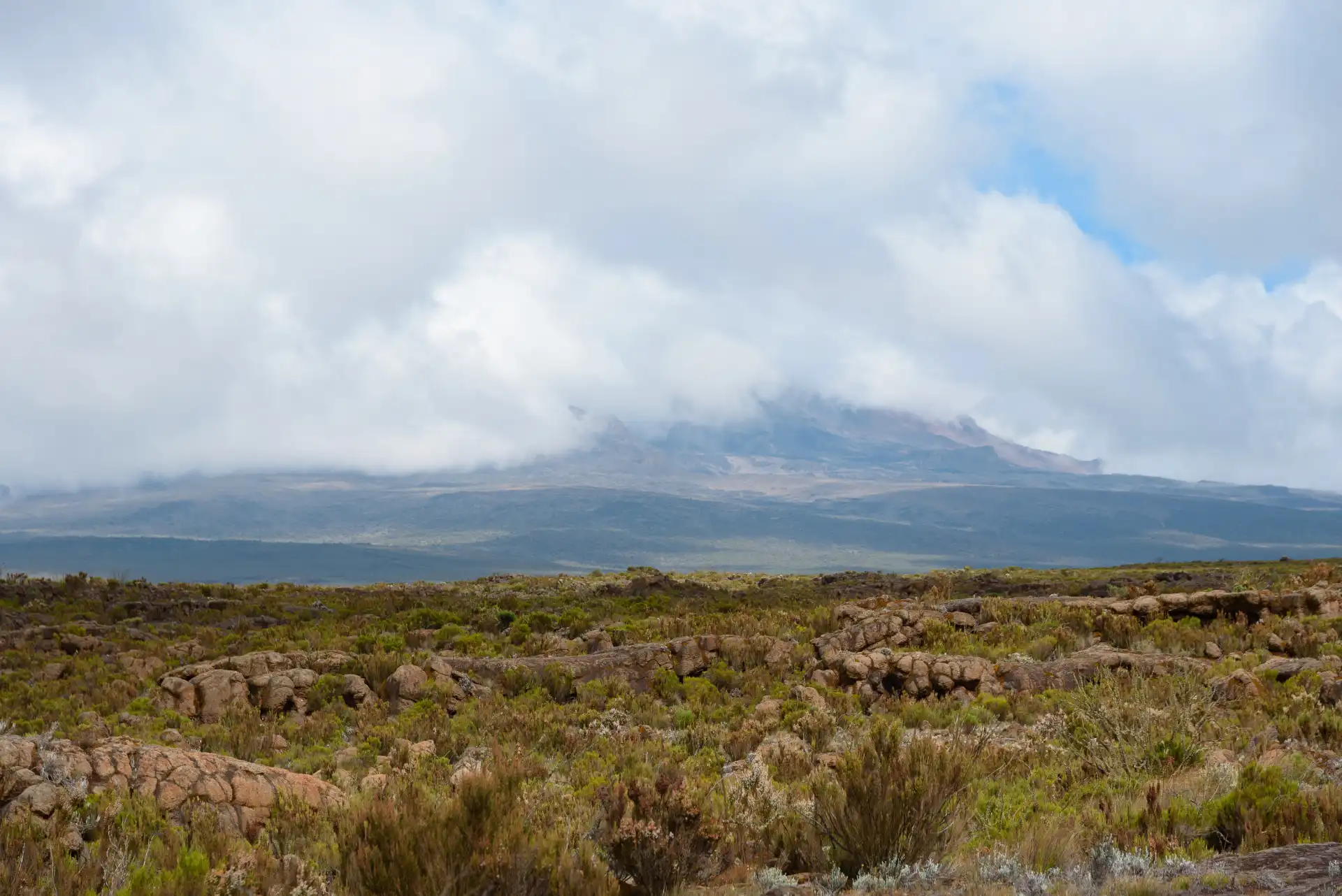
Around 2,800 meters, the forest gives way to heather moorland, a dramatic shift. Trees shrink to twisted, gnarled heathers, and the landscape opens up to reveal expansive views. Giant heathers (Erica arborea) can grow 10 meters tall here, their twisted trunks giving the moorland an otherworldly appearance. The ground is covered in tussock grass, wild everlasting flowers, and scattered proteas. This is where the air starts to thin noticeably, and the temperature drops.
Alpine Desert Zone (4,000-5,000m):
Shira Camp sits at the lower edge of this zone, where vegetation becomes sparse. Hardy grasses, scattered aloes, and resilient mosses cling to life in volcanic soil. The landscape feels stark, almost lunar. Rocks, dust, and endless sky. Yet even here, life persists. Tiny lichens colonize volcanic rocks, insects buzz in the thin air, and the occasional raven circles overhead.
The upper Alpine Desert and Arctic Zone (above 5,000m) with its glaciers and permanent ice is typically only reached on summit attempts, but from Shira, you'll have stunning views of Kibo's glaciated peak looming to the east, a reminder of what lies above.
This journey through ecological zones is one of Kilimanjaro's greatest gifts. You experience the biodiversity equivalent of traveling from the equator to the Arctic Circle. It's a visceral lesson in climate science, showing how temperature, precipitation, and altitude shape life on Earth.
Kilimanjaro's vegetation zones compress an entire continental climate range into 4,000 vertical meters, from tropical forest to polar desert.
The Trek to Shira Camp
The beauty of the Shira Camp trek lies in its accessibility. Unlike multi-day summit attempts, this experience uses vehicle access to dramatically shorten the approach, making Kilimanjaro accessible as a half-day adventure.
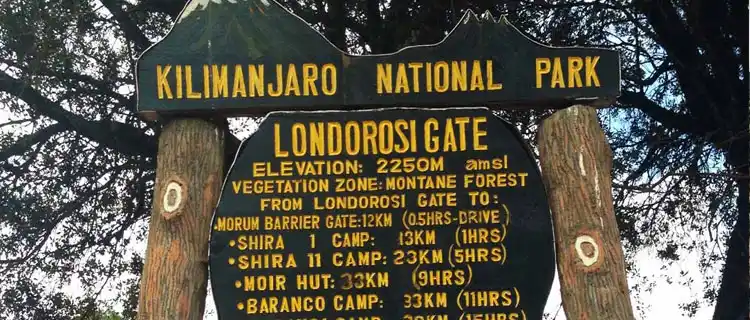
Londorossi Gate (2,100m) to Morum Barrier Gate (3,500m)
The adventure begins at Londorossi Gate on Kilimanjaro's western slopes. After registration, park fees, and permit processing, which can take 30-45 minutes, you board your jeep for the scenic drive up the mountain. The road winds through dense montane rainforest, climbing steadily for approximately 1-2 hours. You'll pass through multiple vegetation zones from the vehicle, watching as tropical forest gives way to giant heathers and eventually open moorland. The road is rough and rutted, expect a bumpy ride. But the views become increasingly spectacular as you gain altitude.
Around 3,500 meters, you reach Morum Barrier Gate (also called Moram Barrier), a checkpoint marking the edge of the heather zone. This is where the road ends and the walking begins. The drive alone has taken you through 1,400 vertical meters, bypassing the muddy rainforest sections that would otherwise require a full day of hiking.
The Trek: Morum Barrier Gate (3,500m) to Shira 1 Camp (3,610m)
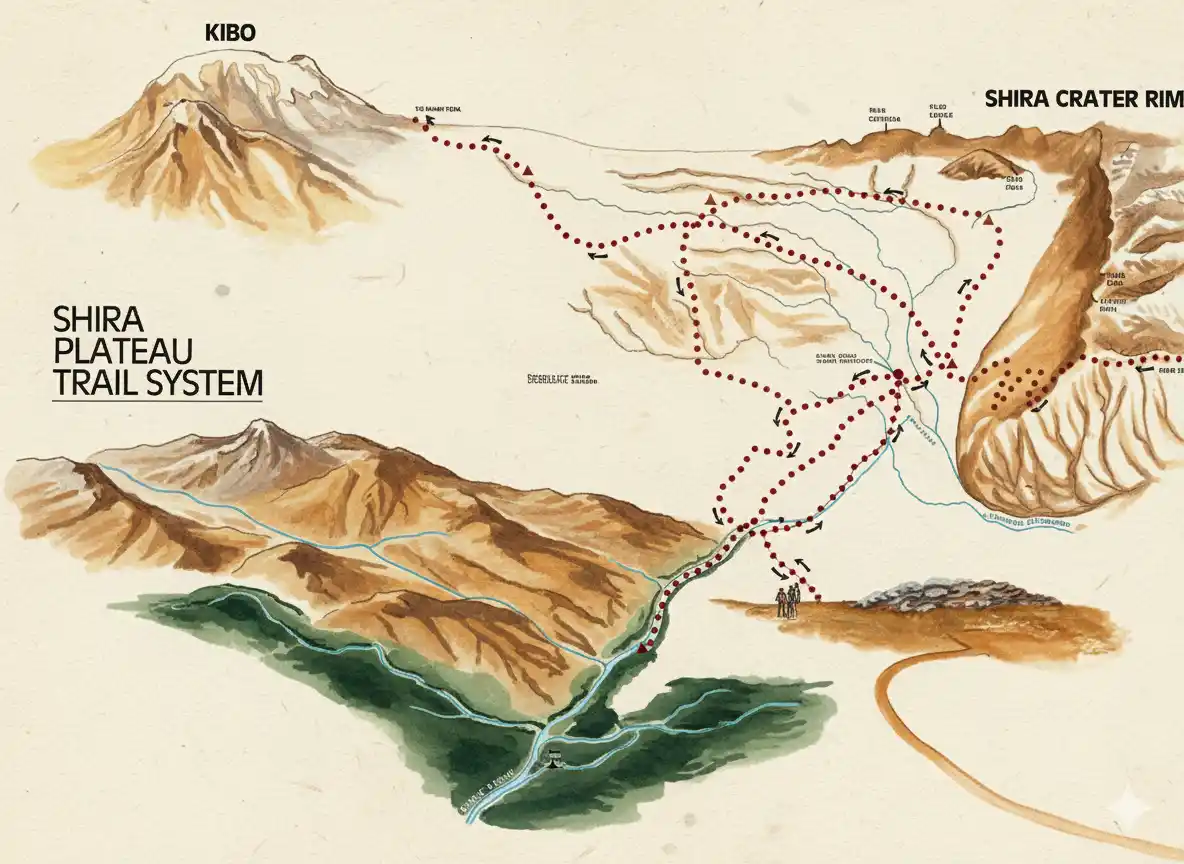
From Morum Barrier Gate, the trail to Shira 1 Camp is a gentle walk of 4-6 kilometers across the heather and moorland zone, gaining only 110 meters in elevation. Because you're already at 3,500m, the modest climb makes this accessible even for moderately fit hikers. The landscape is otherworldly: twisted giant heathers, tussock grass meadows, and increasingly expansive views as you traverse the western edge of the Shira Plateau.
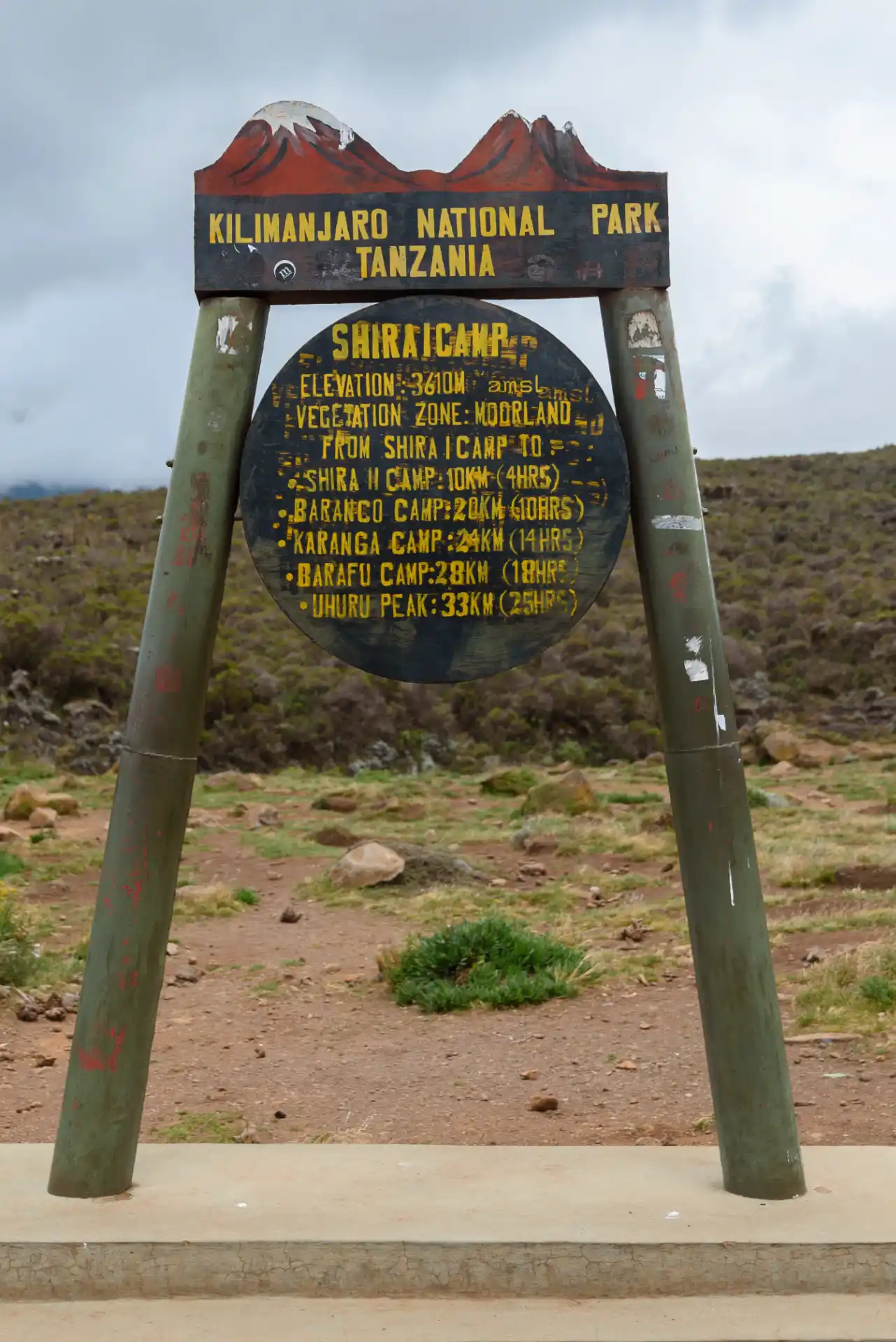
The walk typically takes 2-3 hours at a leisurely pace. Your guide will encourage "pole pole" (slowly, slowly in Swahili), the mountain mantra that helps with acclimatization. As you walk, Kibo's glaciated dome comes into view to the east, dominating the horizon. The air is noticeably thinner here, and you may feel your breathing quicken, but the gentle gradient makes this manageable.
Shira 1 Camp sits at 3,610 meters on the plateau's edge, with panoramic views across the volcanic landscape. Most visitors arrive by late morning or early afternoon, allowing time to explore, photograph, and soak in the high-altitude atmosphere.
Optional Extension: Shira 1 to Shira 2 Camp (3,840m)
For those wanting to venture deeper into the plateau, you can continue another 2-3 hours from Shira 1 to Shira 2 Camp at 3,840 meters. This walk gains only 230 meters over 5 kilometers, crossing more stark, lunar-like terrain. Black volcanic rocks carpet the ground, lava formations twist across the landscape, and the sense of being inside an ancient volcanic caldera intensifies. Shira 2 offers even more dramatic views and a wilder, more remote feeling.
The Return
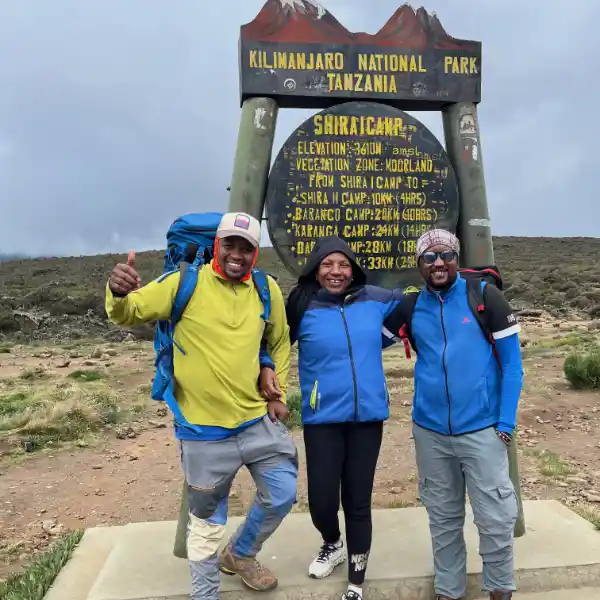
Most half-day trekkers lunch at Shira 1 Camp and then retrace their steps back to Morum Barrier Gate (2-3 hours), where vehicles wait to drive back down to Londorossi Gate. Total time on the mountain: 5-7 hours including drive time. For those who overnight at Shira Camp, the return journey can be done the following morning, allowing time to witness sunrise over Kibo, an unforgettable experience.
Trek Logistics
Life at 3,840 Meters
Arriving at Shira Camp is unforgettable. The plateau stretches in all directions, a high-altitude wilderness unlike anywhere else on Earth. To the east, Kibo's glaciated peak dominates the horizon, glowing pink and gold at sunrise. To the west, the rim walls of the ancient caldera frame views extending to the distant plains below. The sky at this altitude is a deeper, richer blue thinner atmosphere means colors appear more vivid.
Most half-day trekkers enjoy a hot lunch at Shira Camp before returning. Mountain cooks prepare hearty soups, stews, and tea even for day visitors. You'll have 1-2 hours to explore the immediate area, take photos, and absorb the high-altitude atmosphere before beginning the return journey.
For those who choose to overnight at Shira Camp, the experience becomes transformative. Camp life is simple but comfortable: expedition tents, meals prepared by mountain cooks (pasta, vegetables, endless tea), and evenings watching the stars emerge. At 3,610-3,840 meters, you're above much of the atmospheric pollution and light pollution, so the Milky Way blazes overhead with clarity rarely seen from lower altitudes. On clear nights, you can see satellites passing, meteor showers, and constellations that inspired African navigators for millennia.
The cold is real. Temperatures can drop below freezing at night, especially during dry season months. Proper sleeping bags rated to at least -10°C are essential for overnight stays. But the cold is part of the experience, crawling into a warm sleeping bag, sipping hot tea while watching sunset paint Kibo's glaciers orange and red, feeling the crisp mountain air fill your lungs. Sunrise from Shira is spectacular, with Kibo's peak catching first light while the plateau remains in shadow. Worth the cold wake-up call.
At 3,840 meters on the Shira Plateau, you're standing inside a 500,000-year-old volcanic caldera, surrounded by some of the most dramatic alpine landscapes on Earth.
Porters and guides are the unsung heroes of any Kilimanjaro trek. These mountain professionals carry tents, food, water, and supplies, often shouldering 20+ kilograms, while trekkers carry only daypacks. They set up camp, prepare meals, and ensure safety throughout the journey. Most are local Tanzanians from communities around Kilimanjaro, for whom mountain work provides vital income. Responsible tour operators (like Porcupine Tours) ensure porters are paid fair wages, provided proper gear, and treated with dignity. When you trek to Shira, you're not just experiencing the mountain, you're supporting local livelihoods and families.
Kilimanjaro's porters carry 20+ kg loads at altitude, making your trek possible. Fair wages and proper treatment are non-negotiable for ethical tourism.
Who Should Trek to Shira Camp?
The beauty of the Shira Camp trek is its remarkable accessibility. Unlike summit attempts requiring 5-9 days and extreme endurance, the half-day Shira trek offers the mountain's essence in a single day or with one overnight for those wanting the full high-altitude camping experience.
Ideal for:
- Families with children: Thanks to vehicle access eliminating the hardest climbing, children as young as 8-10 (depending on fitness) can handle the gentle walk to Shira 1. Teenagers will find Shira 2 easily achievable. It's a genuine Kilimanjaro adventure without the week-long commitment or extreme altitude risks.
- Safari travelers with limited time: On safari in northern Tanzania? A half-day Shira trek can be added to your itinerary as a memorable side trip—experience Africa's highest mountain without disrupting your wildlife viewing schedule.
- Altitude-sensitive travelers: At 3,610-3,840m, Shira Camp is high enough to feel the mountain's majesty but low enough that most people acclimatize successfully. The gentle walk with modest elevation gain reduces altitude sickness risk.
- Photographers and nature lovers: If your goal is experiencing Kilimanjaro's landscapes, geology, and vegetation zones rather than checking off a summit, Shira delivers 80% of the experience in one day. The photographic opportunities—panoramic views of Kibo, volcanic landscapes, giant heathers—are exceptional.
- Those seeking authentic mountain culture: The half-day format allows meaningful engagement with mountain guides and porters without the exhaustion of multi-day climbing. Learn about Chagga culture, mountain ecosystems, and the communities that call Kilimanjaro home.
- Acclimatization for summit climbers: Many trekkers doing full summit attempts use Shira as a pre-climb acclimatization hike, testing their response to altitude before committing to the longer expedition.
Physical Requirements:
This is remarkably accessible compared to summit attempts. You need moderate fitness, ability to walk 2-3 hours at altitude, and comfort with high-elevation environments. No technical skills required. The modest elevation gain (110m to Shira 1, gentle 230m more to Shira 2) makes this achievable for most healthy individuals. Prior hiking experience helps but isn't essential. The pace is slow and guides adjust to your comfort level.
Is This Trek Right for You?
Planning Your Shira Camp Adventure
The trek to Shira Camp can be arranged as a half-day excursion or overnight camping experience, easily combined with northern Tanzania safaris. Many travelers add it before or after visiting Serengeti, Ngorongoro, and Tarangire. The contrast is extraordinary—wildlife-packed savanna one day, high-altitude volcanic wilderness the next. From Arusha, it's approximately 2 hours to Londorossi Gate, making this a perfect add-on to any northern circuit itinerary.
**Best Time to Trek:** Kilimanjaro can be climbed year-round, but the best conditions are during Tanzania's two dry seasons: **January to March** and **June to October**. During these months, rainfall is minimal, trails are drier, and visibility is clearest. The mountain sees fewer trekkers in January-March, offering a quieter experience. July-September is peak season—the mountain can feel crowded on popular routes, though Lemosho remains relatively quiet.
Avoid April-May (long rains) and November (short rains) unless you don't mind wet, muddy conditions and limited views. December can be excellent—post-short-rains with green landscapes and fewer crowds.
**What to Pack:** For half-day treks: quality hiking boots (broken in!), layered clothing (warm fleece or down jacket—it's cold at 3,500m), rain jacket, sun protection (UV is intense at altitude), sunglasses, hat, water bottles (2-3 liters), snacks, and camera. For overnight trips, add: warm sleeping bag (-10°C rating minimum), headlamp, personal toiletries, and additional warm layers for evening/morning cold.
**Cost and Logistics:** Half-day trek: Expect $200 USD per person depending on group size. Overnight trek: $400-700 USD per person. Prices include park fees ($70 per day), guide, porters, transportation from Moshi/Arusha, lunch (half-day) or full meals and camping equipment (overnight). Responsible operators pay porters fairly, provide proper equipment, and adhere to KPAP (Kilimanjaro Porters Assistance Project) guidelines.
At Porcupine Tours, we offer customized Shira Camp treks as half-day excursions or overnight camping experiences, using experienced guides and ensuring fair treatment of all mountain staff. We can seamlessly integrate the trek into your safari itinerary—imagine exploring the Serengeti one day and standing on Kilimanjaro's volcanic plateau the next. Whether you're a family seeking an accessible mountain adventure, a photographer chasing dramatic landscapes, or simply someone who wants to touch Kilimanjaro without the summit pressure, we'll create the perfect experience for you.
The Mountain Is the Destination
There's immense pressure in mountaineering culture to reach summits. Kilimanjaro's Uhuru Peak has become a bucket-list box to tick, a photo to post, a badge of accomplishment. But mountains offer so much more than their summits. They offer geology, ecology, solitude, challenge, beauty, and perspective. The trek to Shira Camp embodies this truth—it's about experiencing Kilimanjaro as a living ecosystem, a geological marvel, and a spiritual presence, not just a height to conquer.
When you stand at Shira Camp at sunset, watching the glaciers of Kibo turn from pink to purple as stars emerge in the deepening blue sky, you realize that altitude is just a number. The real treasure is being present in that moment, in that place, breathing that thin, cold air and feeling the ancient volcanic plateau beneath your feet. You're standing inside a volcano that erupted half a million years ago. You've walked through five ecological zones in two days. You've seen vegetation adapt to altitude in ways that Darwin would have marveled at. You've experienced Africa's highest mountain without the suffering and risk of extreme altitude.
For many, that's not compromise, it's wisdom. It's choosing the journey over the destination, experience over achievement, presence over Instagram. And in an age where everyone races to the top, there's something quietly revolutionary about stopping halfway and declaring: this is enough. This is everything.
Sometimes the most meaningful mountain experiences happen not at the summit, but on the journey to understand the mountain itself.
Ready to Trek Kilimanjaro Without Summiting?
The Shira Camp trek offers an accessible Kilimanjaro experience that prioritizes landscapes, geology, and cultural connection over extreme altitude. As a half-day excursion or overnight camping adventure, it's perfect for safari travelers wanting to add a mountain dimension to their Tanzania journey. Contact Porcupine Tours to learn more. We specialize in creating customized Tanzania adventures that combine trekking, safari, and cultural experiences. Whether you want a half-day Shira trek as part of your safari itinerary, a family-friendly Kilimanjaro adventure, or an overnight camping experience on the plateau, we'll design the perfect journey for you.
Mount Kilimanjaro has many gifts to offer—the summit is just one of them. Come discover the others.
Written by Porcupine Tours — Your local Tanzania safari experts
Get in touch to plan your safari