Quick Takeaways (11 min read)
- ▸Over 500,000 wildebeest calves born in just 6 weeks (8,000 per day at peak)
- ▸Newborn calves can run with the herd within hours of birth
- ▸Best viewing: January-March on Ndutu plains in southern Serengeti
- ▸Predators (lions, cheetahs, hyenas) concentrate for incredible hunting scenes
- ▸Mobile camps position you right in the action for immersive wildlife encounters
The southern Serengeti's Ndutu region transforms into one of nature's most extraordinary spectacles every year between late January and March. Over half a million wildebeest calves are born during a concentrated six-week period – approximately 8,000 births per day at the season's peak. This synchronised birth event represents one of the greatest wildlife phenomena on Earth, offering safari visitors unparalleled wildlife encounters that rival the famous Mara River crossings.
🌍Why Ndutu? The Geography of Birth
The Ndutu plains lie within the Ngorongoro Conservation Area on the southern edge of the Serengeti ecosystem, straddling the boundary between two of Tanzania's most iconic protected areas. This location is not random – it's the result of millions of years of evolutionary fine-tuning. The region's short-grass plains produce nutrient-rich grazing thanks to volcanic soils from the nearby Ol Doinyo Lengai volcano. These minerals create grasses exceptionally high in calcium and phosphorus – crucial nutrients for pregnant and lactating mothers.
The timing coincides with Tanzania's short rains, which green up the plains just as the wildebeest herds arrive from the north. By late December and early January, over two million wildebeest, zebras, and gazelles carpet the landscape in one of the planet's greatest concentrations of large mammals.
Did You Know?
Volcanic soils make Ndutu grasses 40% richer in calcium than normal savanna grass – nature's perfect nursery for half a million newborns.
🦁The Miracle of Synchronised Birth
The wildebeest's synchronised calving strategy is an evolutionary masterpiece. By concentrating births into a narrow window, the herds employ a 'predator swamping' tactic – there are simply too many vulnerable calves for predators to kill more than a small percentage. It's safety in overwhelming numbers.
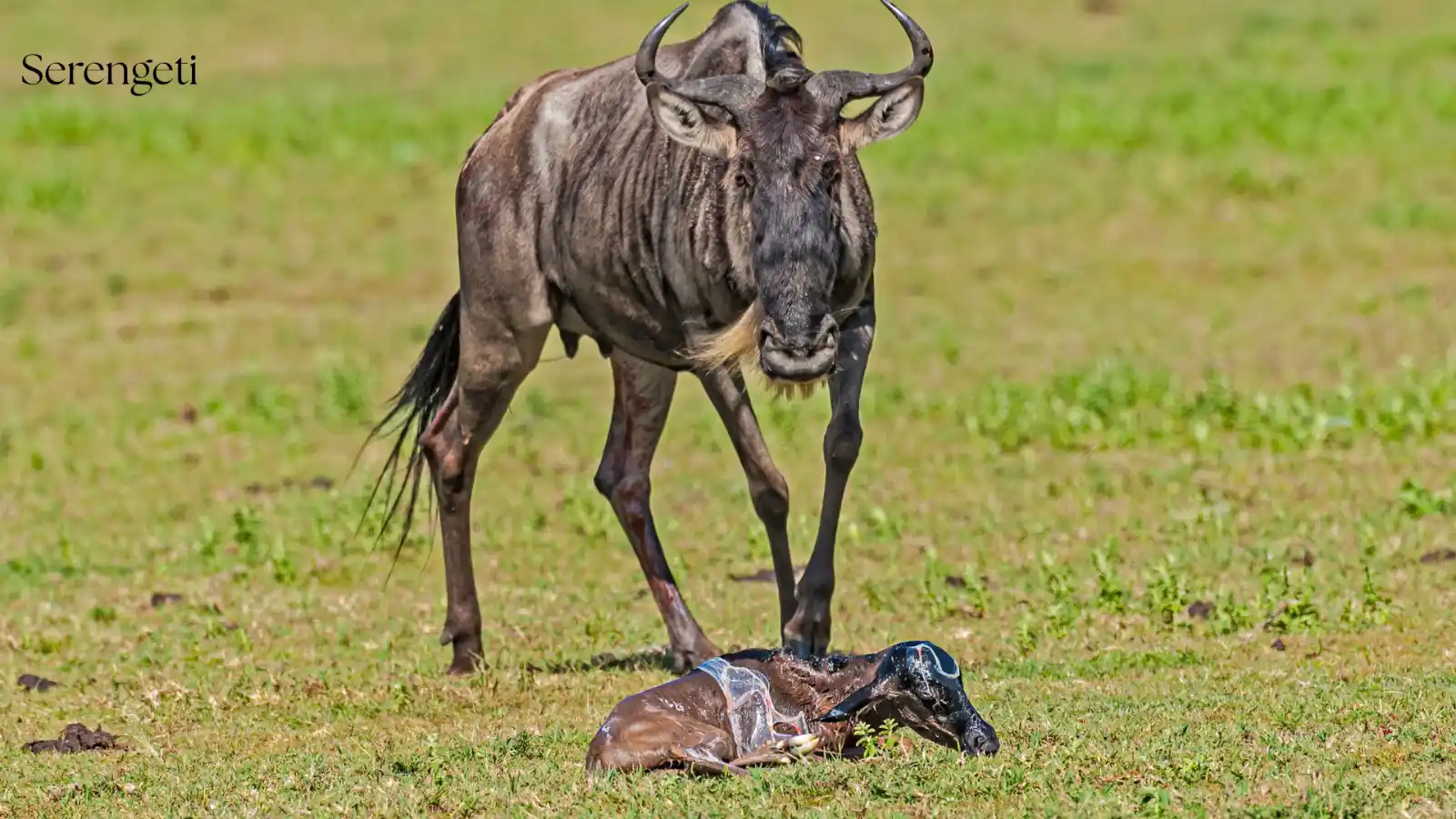
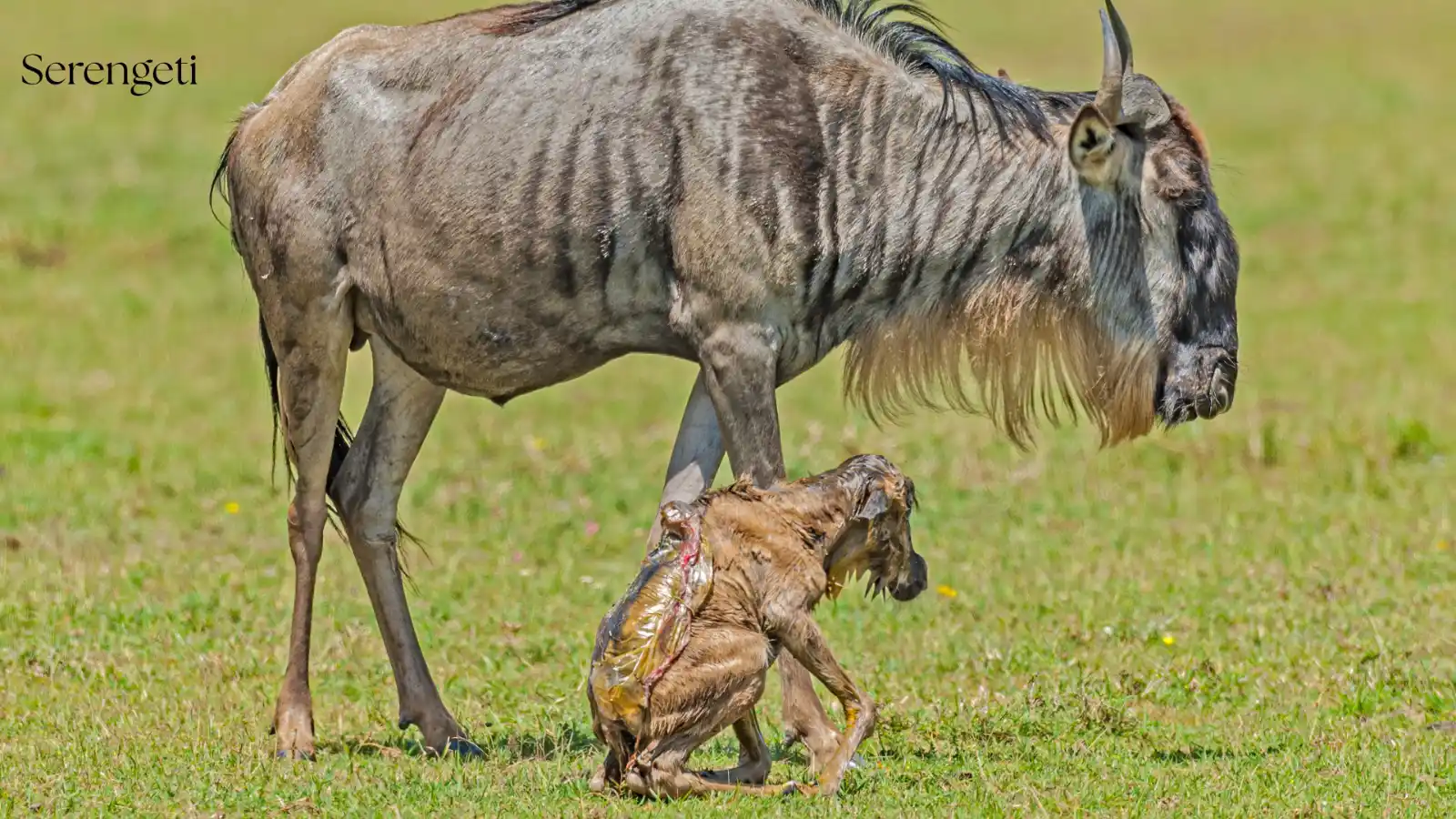
The birthing process is remarkably swift. Within 3-5 minutes of birth, the calf breaks free from its amniotic sac and attempts its first wobbly stand. Within 15 minutes, most calves can walk. Within hours, they can run with the herd – a necessity when predators prowl constantly. A human baby takes about a year to walk, but a wildebeest must be mobile within minutes or perish.
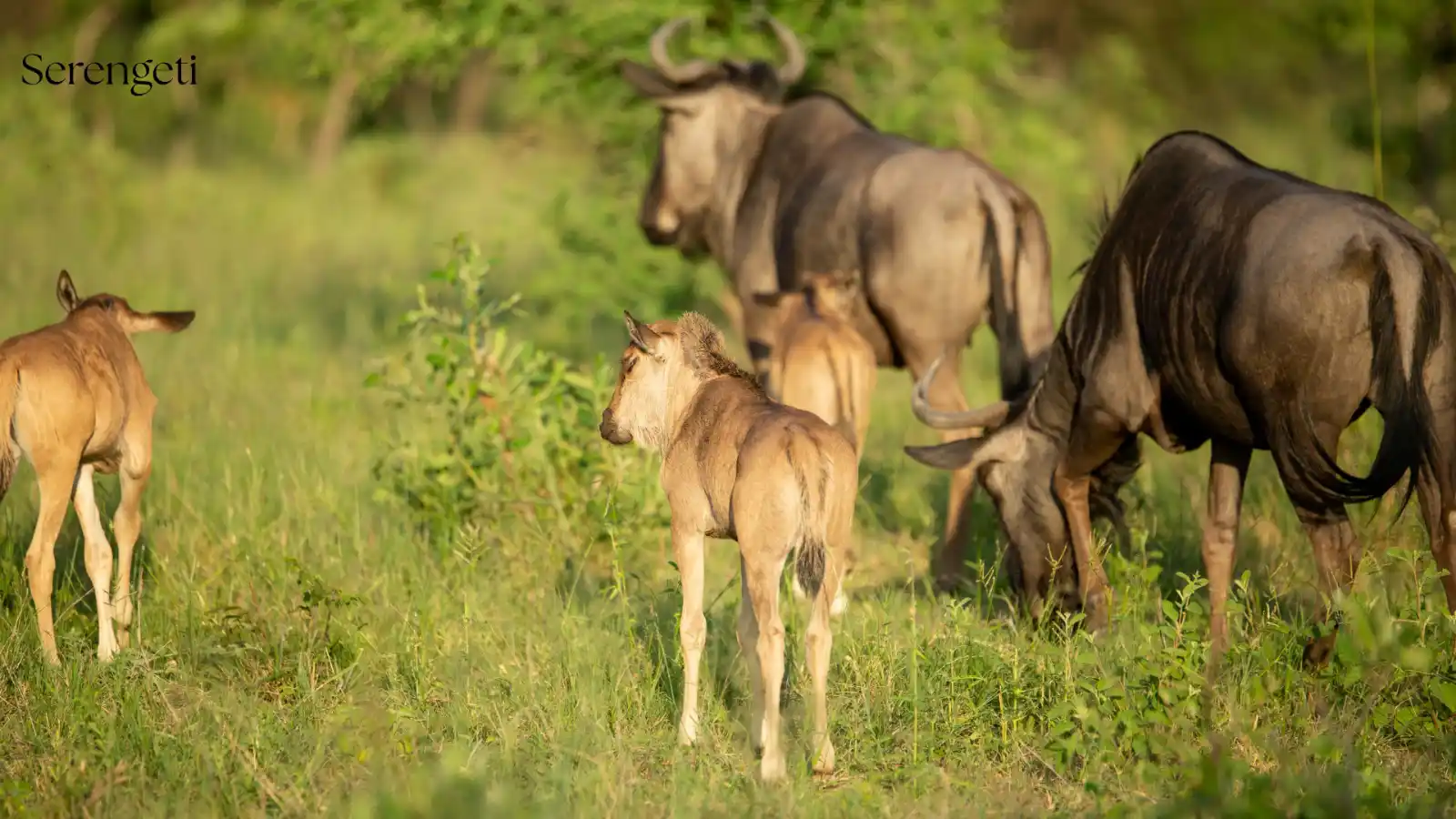
Watching a birth unfold is profound. The calf, just hours old, trots alongside its mother on impossibly spindly legs, already participating in one of Africa's greatest migrations. There's no nursery, no safe refuge – from birth, these calves are nomads, following the rains across hundreds of kilometres.
From birth, these calves are nomads, following the rains across hundreds of kilometres. There's no nursery, no safe refuge.
Wildebeest calves walk within 15 minutes of birth and can run with the herd in just a few hours – faster than any human baby by a year.
🦁The Predator's Feast
Calving season isn't just about new life – it's also about death. The concentration of vulnerable newborns attracts every predator in the region. Lions gorge themselves during this period, often becoming visibly fat from easy hunting. Cheetahs thrive on the open plains, exploding into their famous high-speed pursuits – 0 to 100 km/h in just seconds. Watching a cheetah stalk through the herds and then accelerate into a chase is unforgettable.
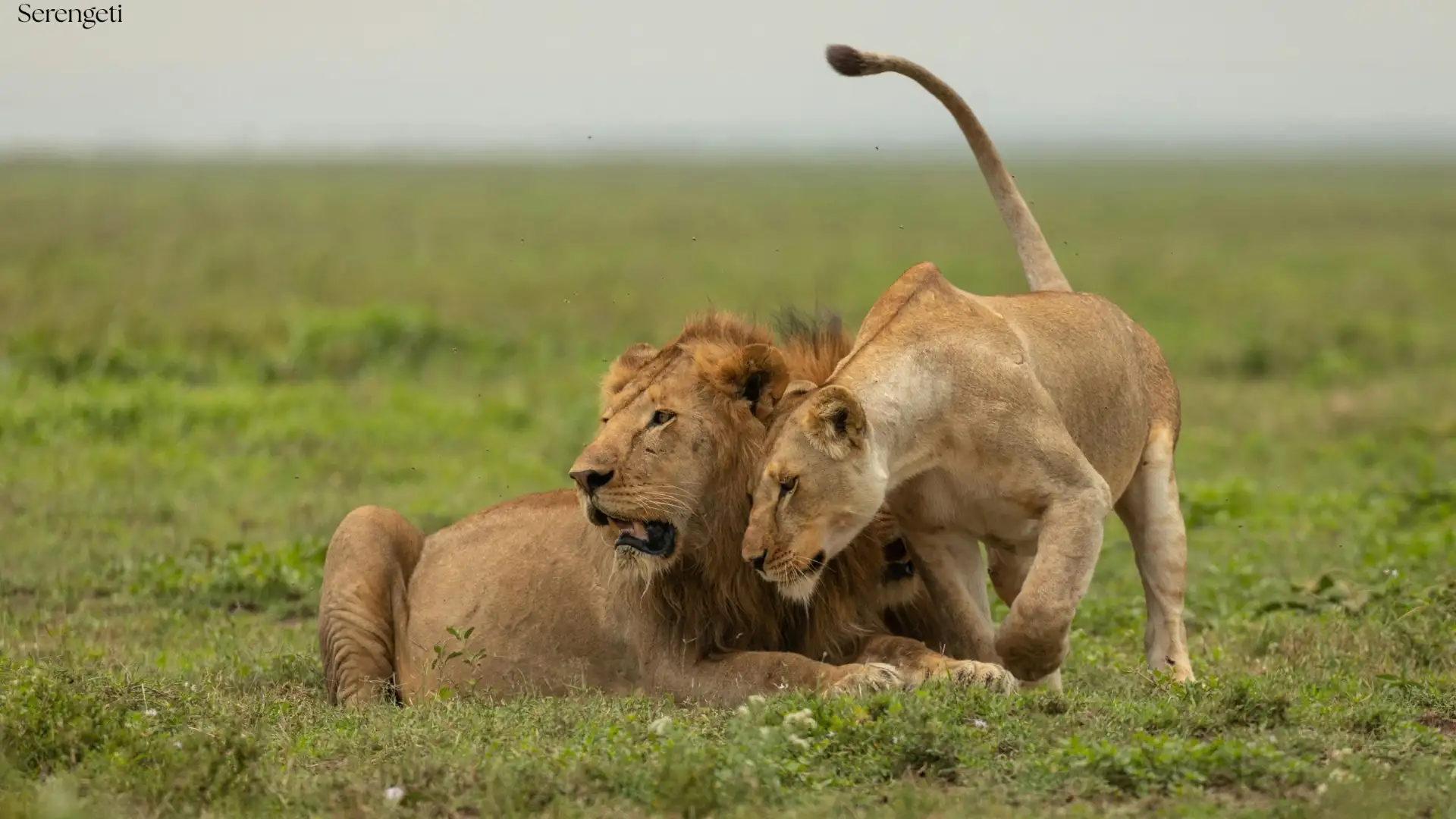
Hyenas, often unfairly maligned as mere scavengers, are actually formidable hunters that excel during calving season. Working in clans, they coordinate attacks with remarkable intelligence. At night, their whooping calls echo across the plains – an eerie soundtrack to the circle of life playing out under African stars. Even smaller predators benefit: jackals dart between wildebeest legs, eagles and vultures patrol from above, and the abundance creates a temporary Eden for carnivores.
Predator Facts
Cheetah hunting success doubles to 50% during calving season – it's the best time to witness high-speed chases on open plains.
📅Why January-March is Prime Safari Season
For safari enthusiasts, calving season offers wildlife viewing that equals or surpasses the famous river crossings. While crossings are dramatic, they're also unpredictable and quick. Calving season delivers consistent action over six weeks. Every game drive reveals newborns, predator hunts, and massive herds. The open plains terrain makes viewing exceptional – Ndutu's short grasslands provide unobstructed sightlines for photography.
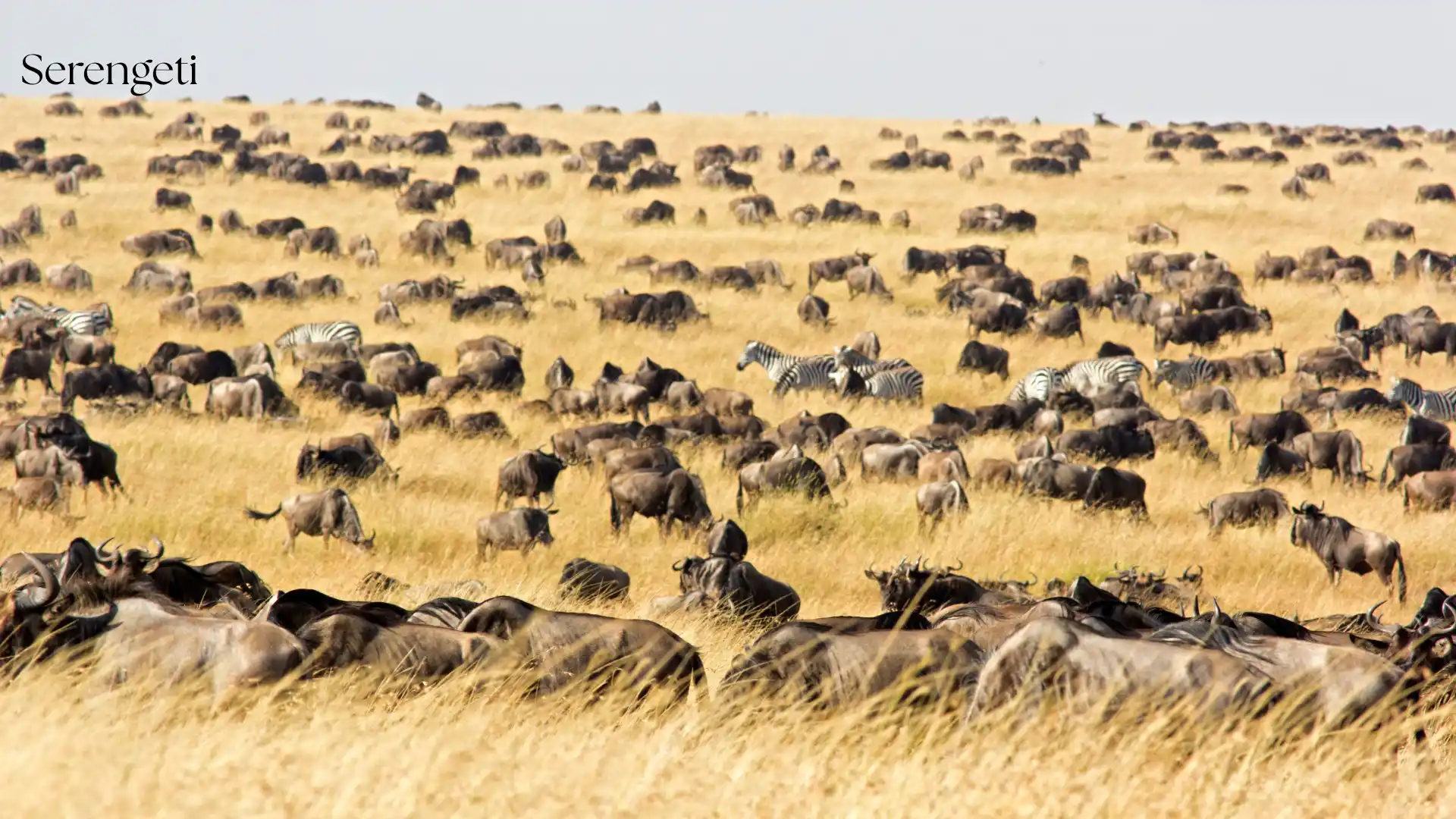
The weather is glorious too. Tanzania's short rains have usually ended by late January, leaving green landscapes and clear skies. The green grass against blue skies creates stunning photographic conditions, especially during golden hour when light paints everything in warm amber tones.
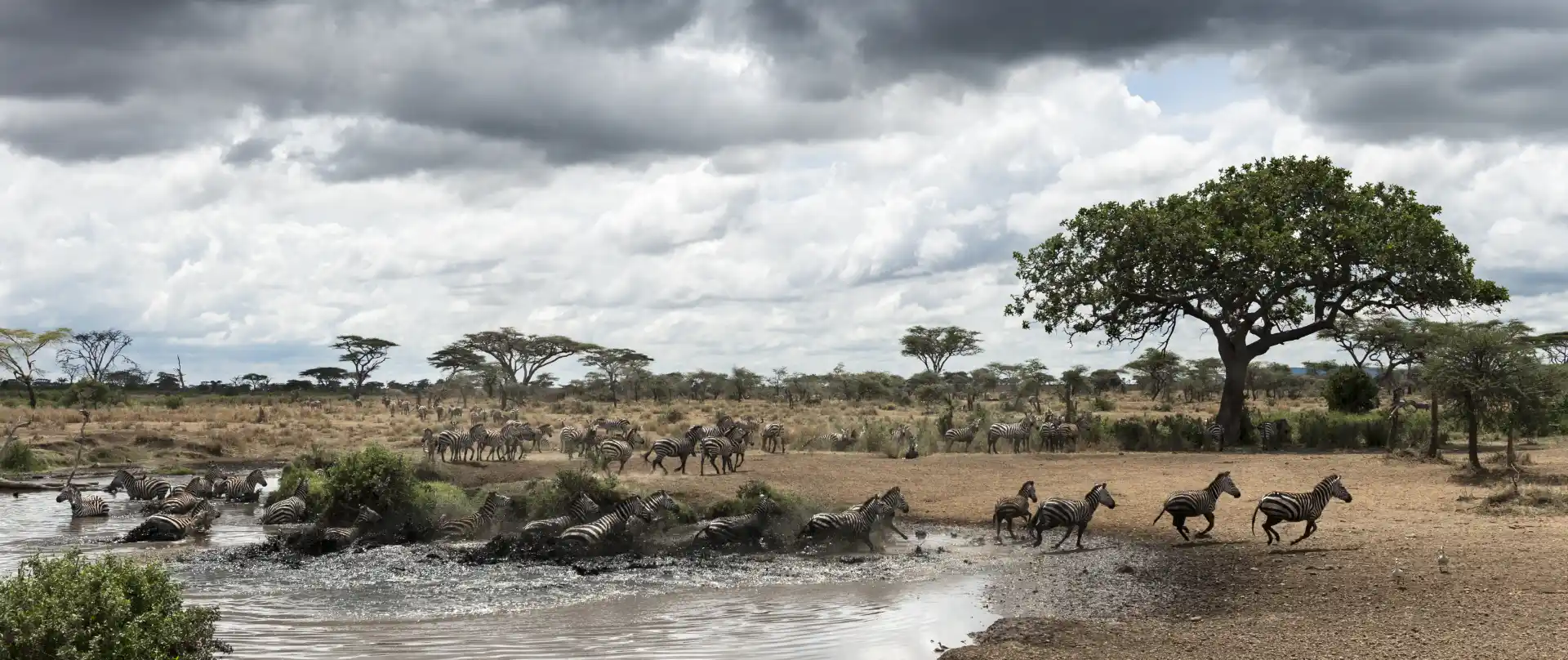
Accommodation ranges from mobile tented camps that follow the herds to permanent lodges. Mobile camps offer the advantage of being right in the action – you can hear wildebeest calling and hyenas whooping from your tent at night. The remoteness adds to the adventure.
The Circle of Life in Action
Calving season embodies the 'circle of life' more visibly than perhaps any other natural event. On a single game drive, you might witness a birth, watch a calf take its first steps, see a cheetah make a kill, and observe vultures cleaning up the remains. While predation scenes can be difficult to watch, they're essential to understanding how ecosystems function. Predators remove the weak and unlucky, ensuring the population remains healthy.
The vast numbers provide perspective on wild nature's resilience. Despite thousands of calves falling to predators, hundreds of thousands survive. The migration has continued for millennia, with predators and prey locked in an evolutionary dance. It's balance on a scale rarely seen in the modern world.
Despite thousands of calves falling to predators, hundreds of thousands survive. The migration has continued for millennia – balance on a scale rarely seen in the modern world.
📸Photography Paradise
For wildlife photographers, calving season offers endless opportunities. The concentration creates foreground, middle ground, and background layers – thousands of wildebeest stretching to the horizon. Predator action provides dramatic storytelling images. Newborn calves with mothers create touching portraits. The flat plains and good light allow for sweeping landscape shots that define East African safari photography.
Cheetah chases on open ground allow photographers to capture the entire sequence from stalk to conclusion. Fast shutter speeds (1/2000 second or faster) freeze motion in stunning ways. The dust kicked up by running herds adds atmosphere. Early morning and late afternoon light creates long shadows and warm tones that elevate photographs from good to exceptional.
Photography Tips
Golden hour light combined with dust from running herds creates those iconic East African safari photos you see in magazines.
⚔️ The Predator Hierarchy
Watching predator interactions reveals the Serengeti's complex social hierarchy. Lions dominate kills, even taking prey from cheetahs and hyenas. Cheetahs must eat quickly before larger predators arrive. Hyenas challenge lions but usually defer. Leopards avoid confrontation by hunting at dawn and dusk and hauling kills into trees.
Witness a kill scene and you'll see this hierarchy play out: a cheetah makes a kill, feeds quickly, then spots hyenas and reluctantly abandons the carcass. Hyenas feed until lions arrive. Finally, vultures spiral down once major predators finish. Within hours, nothing remains but scattered bones – nature's recycling system is ruthlessly efficient.
Beyond the Herds
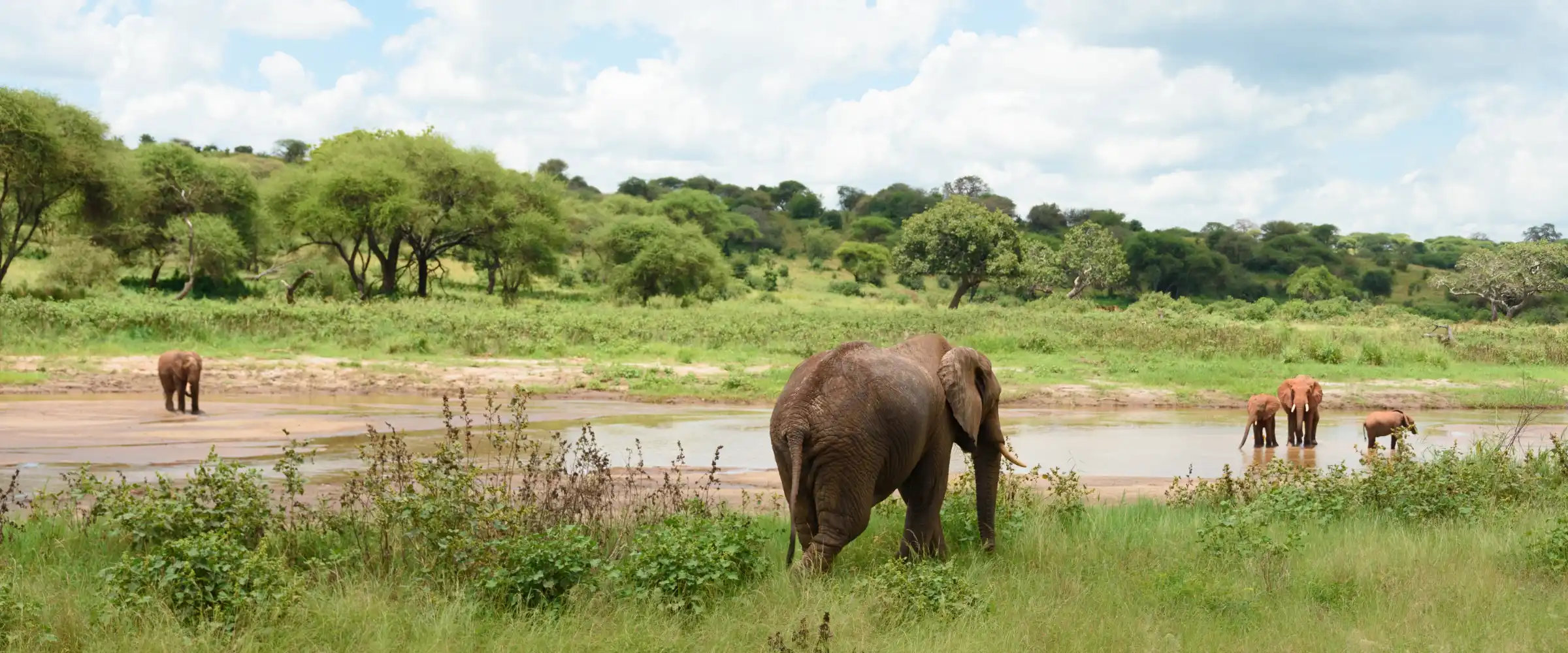
While the migration dominates attention, don't overlook Ndutu's other wildlife. The kopjes (rocky outcrops) host resident lions, leopards, rock hyraxes, and agama lizards. The marshes and Lake Ndutu support hippos, crocodiles, and abundant birdlife including flamingos and pelicans. In the acacia woodlands, you might encounter elephants, giraffes, and numerous antelope species.
Birdwatchers particularly enjoy calving season. The abundance attracts raptors from across the region – eagles, vultures, and kites. Secretary birds stalk through the grass hunting snakes. Ostriches sprint across the plains. The diversity is extraordinary, with several hundred species possible during a week's safari.
� Planning Your Calving Season Safari
Timing is crucial. The herds typically arrive on the Ndutu plains in late December to early January, with peak calving from mid-January through late February. By March, the herds begin dispersing northward. Booking well in advance is essential – calving season has become increasingly popular, and the best camps fill up months ahead.
Our 7-Day Calving Migration Safari is specifically designed to capture this spectacular event, positioning you in the heart of the action with expert guides who understand predator behaviour and know exactly where to find the herds. The itinerary combines the calving spectacle with Tarangire's elephants, Central Serengeti wildlife, and the incomparable Ngorongoro Crater for a comprehensive Tanzania experience.
The Perfect Combination
Many travelers combine a calving season safari with a Zanzibar beach extension, creating the perfect contrast between wildlife action and tropical relaxation. After days of early wake-ups and sensory intensity of the Serengeti, Zanzibar's white-sand beaches provide ideal recovery. It's the classic East African combination – bush and beach – and calving season's January-March timing coincides perfectly with Zanzibar's dry season.
What to Expect on Game Drives
Game drives during calving season follow the herds across the Ndutu plains and surrounding woodlands. Drivers have flexibility to position for the best viewing and photography. Expect to spend hours watching the herds – there's constant movement: calves being born, predators stalking, dominance displays, nursing, and the general chaos of thousands of animals.
Your guide's experience becomes invaluable. Skilled guides can spot predators from incredible distances, reading their body language to predict if a hunt is imminent. They understand cheetah hunting patterns and can position your vehicle ahead of a stalk. Their knowledge helps interpret what you're seeing – is that wildebeest running from a predator or just herd dynamics?
This isn't a zoo or documentary – it's real, unscripted life happening on its own terms. The wildebeest don't perform for tourists; they're simply living as they have for millennia.
💚Why It Matters
In our increasingly urbanised world, experiences like calving season provide essential connection to wild nature. This isn't a zoo or documentary – it's real, unscripted life happening on its own terms. The wildebeest don't perform for tourists; they're simply living as they have for millennia. Being present for that provides perspective increasingly rare in modern life. It reminds us that we're part of nature, not separate from it, and that preserving these wild places is crucial not just for wildlife, but for our own humanity.
The Serengeti's calving season represents nature at its most raw, most beautiful, and most functional. It's birth and death, abundance and scarcity, competition and cooperation all happening simultaneously on an epic scale. For safari enthusiasts seeking the ultimate East African wildlife experience, timing your visit to witness the Ndutu calving season is as good as it gets.
Experience Calving Season With Porcupine Tours
Ready to witness nature's greatest birth event? Our 7-Day Calving Migration Safari is specifically timed for this extraordinary phenomenon, with expert guides who know the Ndutu plains intimately. We work with the best mobile camps positioned right in the heart of the action, ensuring you spend maximum time with the herds and minimum time driving. Contact us today to start planning your calving season adventure, or explore our Tanzania safari itineraries to see how we can incorporate this spectacular event into your East African journey.
Written by Porcupine Tours — Your local Tanzania safari experts
Get in touch to plan your safari